AI consulting services for manufacturing companies, on the quoting, orders, and documentation that eat skilled hours
Phos AI Labs builds and governs AI systems that run RFQ triage, purchase order processing, quality and CAPA documentation, shift reports, and knowledge capture inside your existing manufacturing operation. Every physical action, spec sign-off, and safety decision stays with a qualified human.
What are AI consulting services for manufacturing companies?
AI consulting services for manufacturing companies is the design, implementation, and governance of AI systems that run the office and engineering paperwork around production: RFQ triage, purchase and sales orders, quality and CAPA documentation, supplier communications, shift reports, and knowledge capture.
Phos AI Labs defines the boundary between what AI handles and what a qualified human owns, then builds and governs those systems wired into your ERP so skilled hours stop going to paperwork.

What does AI implementation actually deliver for manufacturing companies?
-
5 to 20%
Revenue uplift from AI-led commercial transformation in manufacturing within two years
A 5 to 10% EBITDA improvement comes with it. The teams that reach those numbers defined their baseline metrics before the build started, not after.
McKinsey, AI in Manufacturing Commercial Operations, 2025
-
1.9M
Unfilled manufacturing jobs projected by 2033
An estimated 70% of operational knowledge is undocumented. When a veteran retires, the fixes they know and the judgment calls they make retire with them.
Deloitte, Manufacturing Talent Gap Report, 2025
-
93%
Of manufacturing AI leaders believe full AI integration will decide who wins in their sector
Most of the field is still running isolated pilots rather than scaled production systems, which means the firms building now are building ahead of it.
KPMG, Manufacturing AI Readiness Survey, 2025


Trusted across 450+ builds by the LowCode Agency team







Why do most manufacturing AI projects never leave the pilot?
Manufacturing AI projects stall on process inconsistency, floor-versus-office misdirection, and knowledge that lives in people instead of systems. Five root causes account for the majority of failed builds.





The AI implementation decisions manufacturing leaders are making right now
The manufacturers moving fastest made the right calls early. These are the calls.
- Decision 01
Where does AI create the most value in our operation?
Office and engineering efficiency leads because the work is language-heavy, high-volume, and the hours are countable before the build starts. Estimating, order entry, supplier coordination, and quality documentation each have different payback profiles and different data prerequisites, and Phos AI Labs identifies the right starting point in two weeks.
- Decision 02
Should a manufacturer build, buy, or partner for AI implementation?
84% of manufacturers are developing AI in-house, per KPMG, and most underestimate what building and sustaining that requires alongside active production schedules. Most teams need a clear view of which approach fits which use case before committing time and budget to either path.
- Decision 03
Do we standardize our processes first or automate what we have?
AI amplifies inconsistent processes as readily as consistent ones, so the teams that ship decide which workflows are standardized enough to automate now and which need process cleanup first. That decision belongs at the start of the audit, not after the build reveals the problem.
- Decision 04
How do we prove AI implementation paid for itself?
Hours returned per engineer, quote turnaround time, and order-entry error rate are the right first metrics. McKinsey puts an AI-led commercial overhaul at a 5 to 20% revenue uplift and a 5 to 10% EBITDA improvement within two years for teams that define those numbers before the build, because the baseline is what makes the improvement visible and defensible.
- Decision 05
How do we move from AI pilot to production?
Production readiness requires a defined human boundary, a redesigned workflow, and a named internal owner. Most manufacturers still in pilot are missing at least one of the three, and the answer is almost never the technology.
Eight manufacturing workflows Phos AI Labs runs so your skilled staff stay on the work that requires their judgment
From the estimator's desk to the back office, these are the office and engineering workflows delivering measurable time back right now. Every one keeps a qualified human in control of anything physical.
- 01
RFQ triage and quoting
Reads inbound RFQ emails and specs, extracts line items, and drafts a first-pass quote for your estimator to review and approve. One manufacturer cut RFQ handling time from 13 minutes to 2.
-
 02
02Purchase and sales order processing
Reads purchase orders in any format and enters them into your ERP without rekeying, flagging mismatches for a buyer to resolve before they become invoicing problems. Cuts manual order admin by 60 to 70%.
- 03
Shift and production reports
Turns floor notes and machine logs into a structured end-of-shift handover so the next shift starts with full context and the right information, not a whiteboard summary.
- 04
Quality and CAPA documentation
Drafts CAPA reports, root-cause write-ups, and deviation records from investigator notes so a qualified engineer spends their time reviewing and signing rather than writing the document from scratch.
-
 05
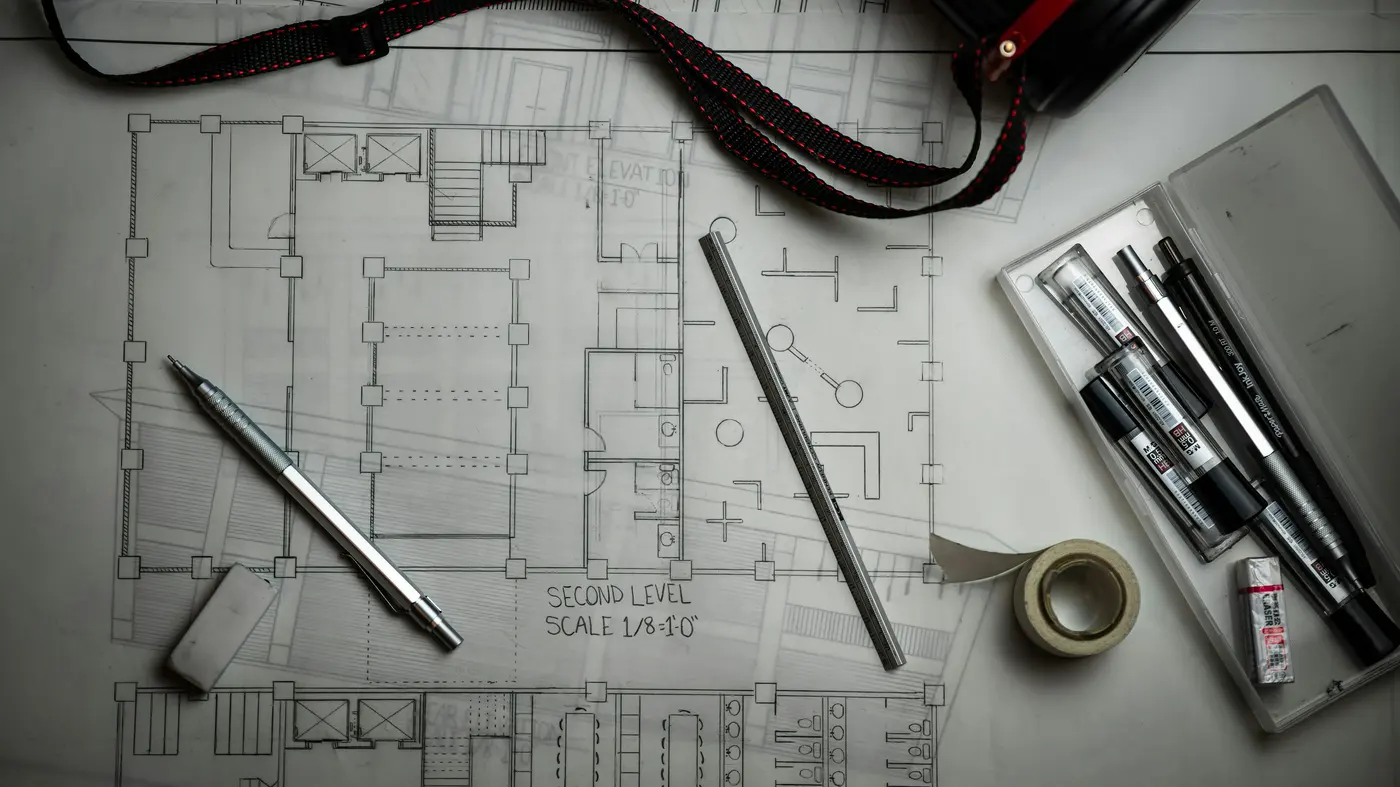
05Engineering spec and design reuse
Surfaces the closest prior job, drawing, or spec for an engineered-to-order quote so estimators and engineers stop rebuilding work that already exists and redirect those hours to new opportunities.
- 06
Supplier communications
Drafts supplier emails and translates technical back-and-forth across quality, engineering, and procurement, including multilingual versions, for a qualified person to review before sending.
- 07
Tribal knowledge capture
Turns veteran operators' SOPs, fixes, and judgment calls into a searchable knowledge base that new hires can query in plain language, preserving decades of operational intelligence before the retirement cliff takes it.
- 08
Company knowledge for the office and floor
Work instructions, machine manuals, compliance records, and prior job history made answerable in plain language with the source attached, in real time, for anyone on the team.
AI prepares:
- RFQs, orders, and reports drafted from your own data.
- Quality and CAPA documentation assembled for a qualified reviewer.
- SOPs, manuals, and prior work made searchable in plain language.
Qualified people decide:
- Machine, PLC, or safety-interlock control.
- Final spec, tolerance, or quality release.
- Autonomous production or physical action.
How Phos AI Labs implements AI consulting services for manufacturing companies: three steps
The canonical Phos AI Labs arc, with the manufacturing boundary built into step one: AI Readiness Audit, then AI Foundation, then AI Implementation. You decide how far to go.

- Step 1
AI Readiness Audit for manufacturing companies (2 to 6 weeks)
We map where office and engineering hours go across your operation, rank workflows by value and readiness, and identify which need process standardization before any model touches them. Standalone audit: 2 weeks. Full multi-department audit: 3 to 6 weeks.
- Step 2
AI Foundation: installing inside your existing systems before anything goes live
We install the right models on the right data posture, wired to your ERP where it helps, with a qualified human approving every output that carries cost, quality, or safety implications before it acts. Nothing touches a machine, a PLC, or a safety interlock.
- Step 3
AI Implementation: live workflows, measured from week one
Your office, engineering, and floor-adjacent staff work directly with every workflow Phos AI Labs runs, and we track hours returned, quote turnaround time, and order-entry accuracy from the first week of live operation.
What does responsible AI implementation require in a manufacturing operation?
Security, compliance, and human oversight must be built into manufacturing AI systems before deployment. On a plant floor, the boundary between AI and human decision is not a governance preference. It is a safety control.
- 01
The human boundary is a safety control.
AI drafts, extracts, and assembles the paperwork around production. It never controls a machine, a PLC, or a safety system, and it never issues final spec, tolerance, or quality release. A qualified human owns every physical action and every sign-off, because a confident wrong answer from a model on the floor is a safety incident.
- 02
Proprietary drawings and process data stay inside your environment.
Drawings, specs, and process data never leave a controlled boundary or reach a public model. The most common real-world exposure is staff pasting proprietary specifications into consumer AI tools while working on a quote or a deviation. A governed rollout removes that path before it becomes an IP or quality event.
- 03
ISO, IATF, and ITAR compliance built in from day one.
ISO 9001, IATF 16949, ITAR, and your customers' quality requirements are written into the architecture before deployment, not added when the audit arrives. Every system Phos AI Labs builds is designed to move your SOC 2 path forward at the same time.
- 04
Human oversight on every output carrying cost, quality, or safety risk.
Generative models are probabilistic and can produce confident, wrong answers. Every AI output that carries cost, quality, or safety implications passes through a qualified person before it acts, and every decision is logged with the reasoning so it can be traced in an audit or a customer quality review.
- 05
Governance sized for a plant, not a Fortune 500 compliance department.
Enterprise frameworks assume a compliance department you may not have. Phos AI Labs builds a governance structure that is firm enough to satisfy your customers' audits and practical enough that your team will actually follow it.
What your manufacturing operation gets from a Phos AI Labs engagement
Every engagement produces something your team owns, understands, and can run from day one.
AI Readiness Report.
Where AI belongs in your operation, ranked by value and sequenced by readiness, with the workflows worth automating now, the ones that need process standardization first, and the decisions that stay with your qualified staff.
Built and deployed systems.
RFQ triage and quoting, purchase and sales order processing, quality and CAPA documentation, shift reports, or a knowledge base for your office and engineering teams. Live, tested, and adopted before engagement ends.
A tribal-knowledge base.
Your veterans' SOPs, fixes, and judgment captured into a searchable system new hires can query in plain language, before the retirement cliff takes it with them.
Team training and enablement.
Your office, engineering, and floor-adjacent staff trained on the tools they use daily, built around your specific workflows and quality requirements.
A governance owner and runbook.
A named internal owner and the documentation to keep AI governance running as tools, standards, and business rules change.
Why manufacturing companies choose Phos AI Labs over a generalist AI consultant or in-house build
450+ systems built. Claude (Anthropic) Partner. Select OpenAI Partner. That track record matters in manufacturing AI consulting because the gap between a pilot on the estimator's desk and a system running across the office, engineering, and back office is where most builds collapse.
- 01
We replace a hire you cannot make.
The person you need understands manufacturing office and engineering workflows at the process level, knows how to wire AI into an ERP without disrupting active production, and can manage implementation alongside a full order book. That role does not exist on a job board, and the $250K+ senior-hire cost assumes you find it. Phos AI Labs is that capacity on a monthly engagement, without the permanent overhead.
- 02
We build the systems we scope, wired to your ERP.
Most AI consultants deliver a strategy deck and a vendor shortlist. Phos AI Labs ships systems integrated with your ERP and your existing office workflows, with qualified human review gates built in and every workflow live before the engagement closes.
- 03
We define the human boundary before anything ships.
Most AI consulting engagements in manufacturing fail at quality or safety review because nobody documented exactly what the model handles and what a qualified person owns. Phos AI Labs defines that line during the AI Readiness Audit, documents it, and builds it into every system before deployment.
For you if:
- Your office and engineering teams spend significant hours on paperwork that does not require their technical judgment.
- Quoting, order entry, quality documentation, or knowledge capture are still done by hand.
- You're facing the skilled-labor shortage and the retirement-cliff knowledge gap.
- You want measurable outcomes: hours returned, quote turnaround time, and order accuracy.
Not for you if:
- You want AI controlling machines, PLCs, or safety interlocks.
- You want AI signing off specs, tolerances, or final quality release.
- You're not ready to redesign how your office and engineering workflows operate.
How much do AI consulting services for manufacturing companies cost?
Scoped on a call, priced by operation size, structured so each phase funds the next.
Every engagement starts by finding where current spend, on manual estimating, rekeyed orders, and overlapping software, can be redirected into systems that compound. The AI Readiness Audit finds that budget before we ask you for new budget.
- Explore the audit
Tier 1
AI Readiness Audit
from $10,000 fixedThe starting point.
Maps where office and engineering hours go, identifies where AI creates measurable value, and delivers a prioritized roadmap with the human boundary and data posture defined. 2 weeks standalone, 3 to 6 weeks for a full multi-department audit.
- Explore AI Foundation
Tier 2
Phase 1 Build
from $15,000 /mo.RFQ triage and quoting, purchase and sales order processing, quality and CAPA documentation, or a knowledge base. Built, deployed, and adopted.
- Explore AI Consulting
Tier 3
Embedded AI Department
up to $50,000 /mo.Phos AI Labs as your manufacturing AI team: strategy, implementation, governance, and iteration as your operation grows.
- Explore Nexus →
Nexus, the Private AI Workspace
From $500/mo per company, plus tokens.Work instructions, machine manuals, prior job records, and compliance documentation answerable in plain language. Proprietary specs and process data stay inside your environment.
- Explore AI Employees →
AI Employees
$2,500/mo per role, all-inclusive.Autonomous agents running complete office workflows end to end, such as RFQ triage or purchase order entry.
Keep going
- 01
Best AI Consulting Firms for Manufacturing Companies in 2026
How the AI consulting firms serving manufacturers compare on estimating, order entry, and quality documentation depth, and who each one is built for.
Explore → - 02
AI in Manufacturing Use Cases: ROI Guide for 2026
The manufacturing workflows where AI is working today, and the ones that need process cleanup before a model touches them.
Explore → - 03
AI-Enhanced Quote Generation for Manufacturing
How AI reads an RFQ, extracts line items, and drafts a first-pass quote for an estimator to review.
Explore → - 04
Which manufacturing workflows are ready for AI
How to identify the workflows ready to automate and the ones that need cleanup first.
Explore → - 05
AI Consulting
AI consulting that starts where your team already is. Phos AI Labs audits where AI belongs, builds the highest-value systems, and embeds as your AI team. Audit from $10K.
Explore → - 06
AI Governance
AI governance is the set of rules, access controls, and review steps that decide who can use AI, on what data, and how it gets shipped, installed inside a company's own tools and data.
Explore → - 07
Nexus, the Private AI Workspace
Nexus is a private, company-owned AI workspace grounded in your business knowledge. Rolls out in a couple of weeks. From $500/mo, priced by company.
Explore → - 08
AI Employees
An AI Employee is a trained digital worker that runs your recurring work inside your own tools. Rolls out in 3 to 4 weeks. From $2,500/mo per role.
Explore → - 09
AI Readiness Scorecard
Two free tools to benchmark your AI readiness: a 10-step scorecard and a 3-minute voice audit. Personalized priorities, no sales call required.
Explore → - 10
AI for distribution and supply chain
The adjacent vertical: AI on demand forecasting, inventory, procurement, and network planning, with a person committing every plan.
Explore →
In partnership with