






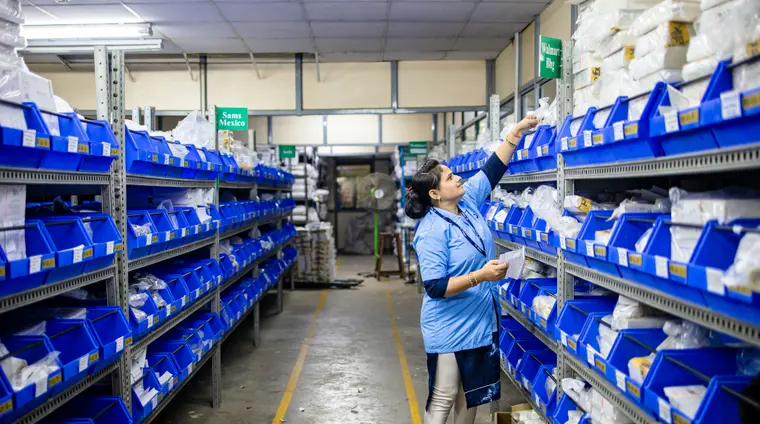











OUTCOME #1
The retyping stops
Data moves between systems without anyone copying it. The job changes from filling in the spreadsheet to checking what the system flagged.
Services

Most automations break quietly. An API changes, a field changes type, the person who built it leaves, and the team goes back to doing the work by hand.
Phos AI Labs decides which steps need AI at all, builds the automation inside the tools you already use, and stays to keep it running.
AI automation is software that runs the repetitive steps of a business process, such as reading documents, updating systems, routing approvals, and drafting replies, with AI handling the steps that need judgment and a person approving what matters. Phos AI Labs starts by sorting the steps. Most need a plain rule, which is cheaper to run and never makes up an answer. AI goes where the rule runs out.

Claude (Anthropic) Partner · Select OpenAI Partner · CCA-F certified team
75% less
training admin time for GAF, across 1,200 events a year
40+ AI systems
shipped to production in the last 6 months
Trusted across 450+ builds


Gartner expects more than 40% of agentic AI projects to be canceled by the end of 2027, because of rising costs, unclear value, or weak risk controls. The causes we see in audits are more ordinary.
One team used three different tools to produce the same weekly report, depending on who was available. Automating that only makes the inconsistency faster.
The CRM says one thing, the ERP says another, and the Excel file someone updates on Mondays is the one people trust. An automation has to read from one of them.
A report that runs at 6 AM every day needs a scheduled job. Paying a model to think about it every morning runs up a token bill for work a few lines of code would do.
A field in the ERP changes type and the nightly sync fails without an error. Reports show zeros. The person who built it is gone, and nobody in the building can fix it.
Every step in a process lands in one of four places. Sorting them is most of the work, and it decides what the system costs to run every month.
If a task takes 30 minutes a week, automating it costs more than it saves. The budget goes to the step costing $2,000 a week before the one costing $200.
No judgment involved. If an invoice is over $5,000, route it for approval; otherwise, pay it. A workflow tool or a few lines of code runs this for almost nothing, the same way every time.
Reading a customer PO from a PDF and filling the order form. Matching an invoice to the warehouse receipt when one says pounds and the other says units. The AI drafts, a person confirms, and each confirmation is logged to a name.
Work that needs judgment across many tools, like researching a prospect across the web and your CRM, or answering a client with the full account history. Agents cost the most to run, so they come last.
At GAF, the first version fixed the sequence. Classes could no longer be closed in the wrong order, and rosters reached trainers without anyone sending them. The AI layer came after, on top of clean, structured data.
Phos AI Labs builds in that order on every engagement. Once the rules run, the data is consistent, and AI working on consistent data gives answers people trust.
How the work runs today, step by step, including the parts that live in WhatsApp and email.
Every step sorted into leave it, rule, AI step, or agent, with the hours and dollars behind each one.
Which system owns each record. If your ERP's API is slow, a nightly copy the automation can read.
Keep, extend, replace, or retire, for every tool the process touches.
Built in n8n, in code, or in the tool you already pay for, whichever fits the job.
Where a person confirms, what they see when they do, and a log of who approved what.
Read-only to start, write access granted by role and by use case, every write logged.
Hosting and model usage per month before you commit, with each task routed to the cheapest model that does it well.
Failed runs and silent syncs flagged to a named owner the same day.
How each automation works, how to change it, and who to call.
What ran, what it saved, what broke, and what to automate next.
First the audit, then two automations, then a monthly rhythm of building and measuring.
AI voice interviews with the people doing the work, plus read-only access to the systems. We look for the handoffs where someone retypes what another system already holds.
Time per task, times how often it happens, times the people doing it. Your department heads check the numbers before anything is built.
One automation picked for return, and one quick win the team sees in the first weeks. People who watch AI take over their copy-paste work tend to back the next project.
Every AI step starts with a person approving each output. As the approval rate climbs on real work, routine cases move to the system and people keep the exceptions.
Hours saved, error rates, and run cost, every month. The next automation earns its place from those numbers.
Automation runs through all three phases. The audit finds it, the team learns to work with it, and implementation keeps it running.
The audit that finds where AI belongs and what it is worth.
See AI Consulting →Your team gets fluent on the work AI is about to touch.
See AI Enablement →Agents and systems that run the work, built and embedded.
See AI Implementation →Each area has its own page with the workflows we build most. Start with the one where your team loses the most hours.
Lead research, qualification, CRM updates, proposals, and follow-up, built around how your team sells.
Research, content, campaigns, and reporting connected, so qualified demand reaches sales with its context.
A title research firm's staff type county records into forms by hand. A contractor's change orders arrive as WhatsApp voice notes. A distributor's team rekeys every customer PO into the ERP.
If someone on your team retypes data another system already holds, that is your first automation.
Book a callCompanies come to Phos AI Labs with people retyping data and automations nobody owns. They leave with workflows that run, a person behind each one, and a monthly number they can check.
OUTCOME #1
Data moves between systems without anyone copying it. The job changes from filling in the spreadsheet to checking what the system flagged.
OUTCOME #2
Each workflow has a named owner, monitoring, and a runbook. When an API changes, someone sees the failure the same day and fixes it.
OUTCOME #3
You know what each automation costs per month in hosting and model usage, and what it saves. Spending $2,000 a month on tokens is an easy yes when it replaces $4,000 of manual work.
Three builds, three kinds of work: field operations, sales and client service, and a company's own back office.
GAF
We were using spreadsheets and hoping nothing fell through the cracks. After working with Phos AI Labs, their AI implementation handles 75% of the administration and the team handles the work they're actually great at.
Matt Hegge, Director, GAF
Payroll Mexico
I set up two recurring tasks, one daily, one weekly. We have a bunch of leads to follow. I don't know how Phos AI Labs does this. I am amazed.
Franklin Delano Frith II, Owner, Payroll Mexico
LOW/CODE Agency
Every proposal needed me in the room. The sales team couldn't move without me. Now the AI handles the routine ones. I review the complex cases.
Jesus Vargas, Founder and CEO, LOW/CODE Agency
 Read the full story →
About half the search results for “AI automation agency” teach people how to start one. Before you hire anyone, ask who owns the workflows, what they cost to run each month, and who fixes them when an API changes.
The team behind Phos AI Labs has delivered 450+ software projects for LOW/CODE Agency clients. When a workflow tool hits its limit, the same engineers write the code.
Every automation lives in your cloud and your workflow tool, under your API keys, as work for hire. If you ever stop working with us, everything keeps running.
Models change and APIs change. Most clients keep at least a small support plan, so someone watches the runs, rotates the keys, and fixes what drifts.
AI automation with Phos AI Labs starts with discovery: from $10,000 for companies under 100 employees, and scoped to the teams and systems involved above that. After discovery, building and running the automations typically costs $10,000 to $50,000 a month, depending on how many workflows are in flight.
Discovery
Process map, automation register, build-or-buy call, run-cost estimate, and the two first projects scoped. Larger organizations get a scoped price. You own all of it.
Start hereBuild and run
Production automations built, monitored, and improved, with a monthly review of what ran and what to build next. Up to $50,000 a month, scaling with how many workflows are in flight.
Book a callAI Employees
One AI employee in one role, set up and managed by Phos AI Labs, all-inclusive with no usage fees. For teams that want one job covered before a full engagement.
See AI EmployeesRun costs are part of the decision, so you see them first. Hosting and model usage are billed by the providers to your own accounts, and we estimate them before you commit. For one 100-person distributor, an order-intake AI layer was estimated at $180 to $320 a month in hosting and $900 to $2,200 a month in model usage.
Where automation connects to the rest of the work.
The phase where automations, agents, and AI employees run inside your operation.
Explore →One AI employee in one role, set up and managed for you, from $2,500 a month.
Explore →Ten questions and a personal score, before you talk to anyone.
Explore →What Phos AI Labs has shipped, with the numbers behind each build.
Explore →In partnership with