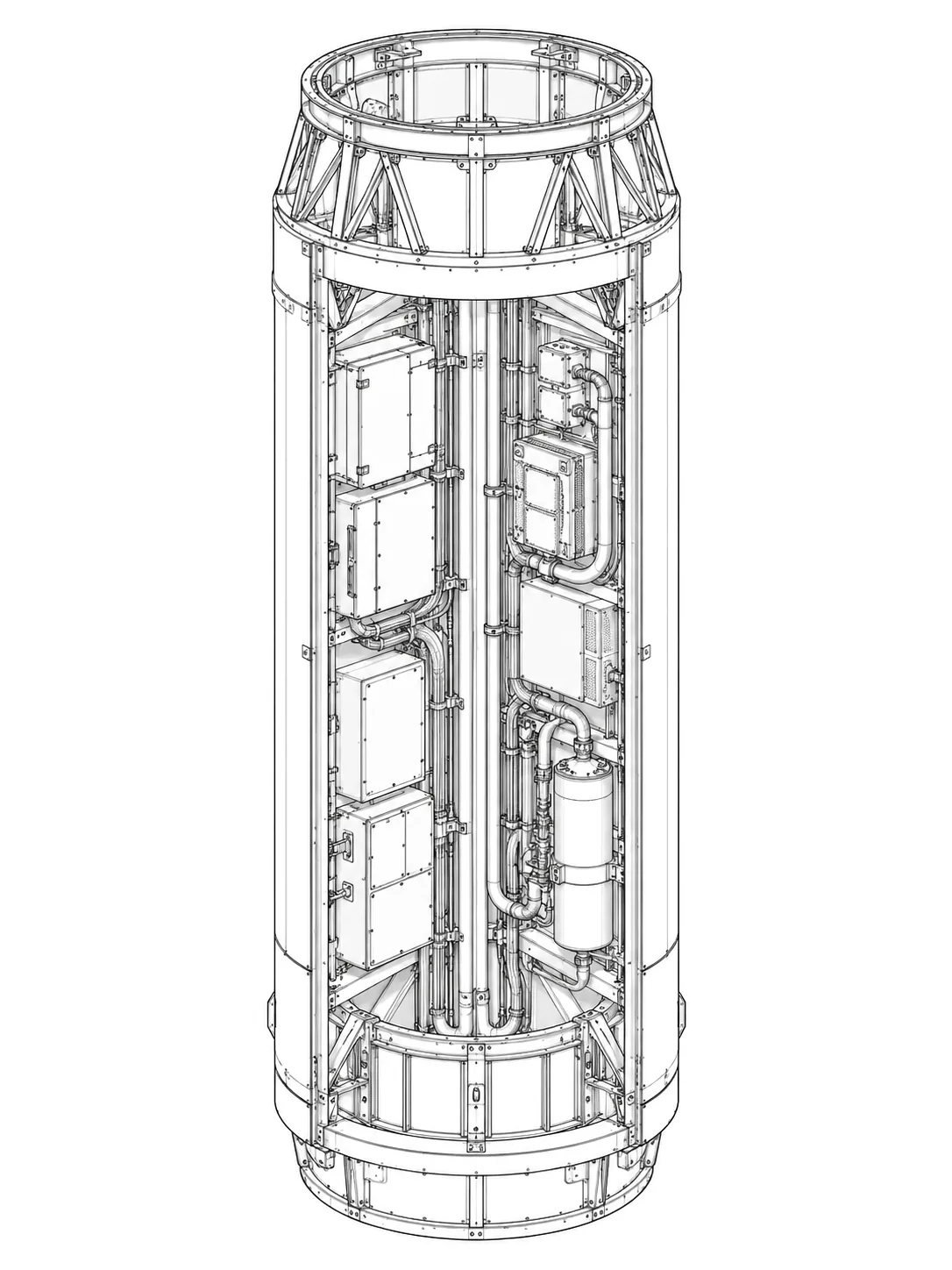



















Line drawing of a cylindrical avionics bay opened up to show circuit boards, cable runs and a pressure bottle inside.

The company brain: a map of how your business actually works

Every business runs on knowledge that lives in people's heads, old Slack threads, and one operator who knows where everything is. Phos AI Labs extracts it into a company brain, structured so any model can read it.

A company brain is the living map of how a business actually works, written down once and kept current: the operating manuals, decision rules, customer archetypes, voice packs, and systems map that no company ever put on paper. Load it into Claude, ChatGPT, or your own workspace and the answers stop sounding generic. The intelligence is already there. The context is what is missing. Phos AI Labs extracts and structures that context so every model connected to your company finally knows what your company is.

OpenAI Select Partner and Claude Partner Network

Claude (Anthropic) Partner · Select OpenAI Partner · CCA-F certified team

  • 77 pain points, 29 opportunities

    mapped in a single company brain engagement

  • 40+ AI Systems

    shipped to production in the last 6 months

Trusted across 450+ builds

  • American Express
  • Coca-Cola
  • Sotheby's
  • Medtronic
  • Dataiku
  • Margaritaville
  • Zapier
  • Whitecoat Planning

Why does your AI still write like it has never met your company?

Because it hasn't. It does not know your pricing logic, your approval chain, or the way your best operator handles a refund. Every session starts from zero and produces something competent and anonymous.

  • The knowledge lives in people

    Your best operator knows which exceptions are allowed and which are not. None of it is written down anywhere a model, or a new hire, could find it.

  • Every AI session starts from scratch

    Someone pastes in three paragraphs of background, gets an answer, and closes the tab. The next person pastes different background and gets a different answer.

  • The wiki went stale on day one

    The knowledge base was written for humans to read occasionally, and nobody has opened it since the quarter it launched. It describes a company that no longer exists.

  • Nobody can name the highest-value build

    Without a map of how work actually moves, the automation list is a set of opinions. The wrong thing gets built first and the return arrives late.

Context, written down once and kept current

This engagement extracts and structures.

The map comes first because an agent built on top of a business nobody has mapped produces competent, anonymous output. Once the context is in place, everything built on it answers like it works here.

What you walk away with

  1. 01

    Operating manuals

    How each core workflow runs end to end, including the handoffs where things break.

  2. 02

    Decision rules

    The judgment calls your team makes on instinct, made explicit and repeatable.

  3. 03

    Customer archetypes

    Who buys, why, what they object to, and what makes them stay.

  4. 04

    Voice and context packs

    How your company sounds, so anything the AI writes reads like your team wrote it.

  5. 05

    Systems map

    Every tool in the stack, where they overlap, and where data falls through the gaps between them.

  6. 06

    Handoff analysis

    The moments between people and teams where the most time is lost and the most errors are introduced.

  7. 07

    Shadow IT inventory

    The tools and workarounds people use that leadership does not know about, because the official stack could not solve their problem.

  8. 08

    Prioritized roadmap

    What to build first, what to leave alone, and what comes next, sequenced by return.

  9. 09

    Model-ready files

    The whole brain packaged so it loads straight into Claude, ChatGPT, or your own workspace.

  10. 10

    Maintenance plan

    Who updates what, and on what cadence, so the brain stays current as the operation changes.

What actually happens once you start?

Interviews, extraction, structure, and a working test.

  1. 01

    We interview across every department

    Roughly forty minutes per person: their daily routine, their tools, their handoffs, their frustrations, and the work they do that nobody else fully understands.

  2. 02

    We extract what is only in people's heads

    Decision rules, exceptions, and the reasoning behind them get pulled out and written down in the words your team actually uses.

  3. 03

    We structure it so a model can read it

    The material gets organized the way retrieval needs it, with the hierarchy and cross-references preserved, so an AI can find the right passage instead of the nearby one.

  4. 04

    We test it against real questions

    Your team asks the questions they ask every week. We watch where the answers go thin and go back for what is missing.

  5. 05

    We hand it over with a maintenance plan

    The brain is yours, loaded into whichever models you use, with a named owner and a cadence for keeping it current as the operation changes.

Where does this sit in the engagement?

  1. 01

    AI Consulting

    The audit that finds where AI belongs and what it is worth.

    See AI Consulting →
  2. 02

    AI Enablement

    Your team gets fluent on the work AI is about to touch.

    See AI Enablement →
  3. 03

    AI Implementation

    The company brain is the first build in this phase, and the floor the rest of it stands on.

    See AI Implementation →

This is for you if:

  • Your AI answers are generic and everyone re-explains the company every time.
  • Critical knowledge lives with two or three people.
  • You want to know which build is worth doing first.

This is not for you if:

  • You want a wiki your team reads occasionally.
  • Nobody will make time for the interviews.
  • You want production agents this month, in which case start at the implementation engagement.

What gets built on top of the company brain?

The brain is the floor. Two things stand on it: the environment your team works inside, and the connective layer that runs the operation.

  • AI Operating System

    The connective layer between your CRM, inbox, project manager, and docs. It writes what it learns back into the brain, so the operation keeps teaching itself.

  • Private AI Workspace

    One company-owned AI environment where the whole team works, with the brain loaded and shared by default.

Why does a company brain look different in every industry?

A manufacturer's decision rules live in tolerances and lead times. A law firm's live in precedent and privilege. The extraction follows the operation in front of us.

What does this actually change?

Companies come to Phos AI Labs because their AI sounds like a stranger. They leave with an asset that answers like their best operator, gets sharper as the business changes, and tells them what to build next.

  1. 01

    AI that answers like it works here

    Pricing logic, approval chains, and the way your team handles exceptions all show up in the answer. Nobody has to re-explain the company at the start of every session.

  2. 02

    An asset that compounds

    The brain stays current as operations change, and every model connected to it gets sharper. Documentation that would have rotted keeps gaining value.

  3. 03

    A build order you can defend

    The roadmap comes out of a map of your own operation, so the first thing you build is the thing worth building first.

Does mapping the business actually pay?

It shows up in three places: the value an extraction surfaces before anything is built, the accuracy it buys once systems go live, and the doors it opens with legal and procurement.

LOW/CODE Agency

CONTEXT

Phos AI Labs ran the extraction on its own company before selling it: every team member interviewed, every tool mapped, every handoff scored, and every hour of recoverable time costed, before a single workflow was touched.

WHAT THE MAP RETURNED

The two builds worth doing first, ranked out of a costed picture of the whole operation rather than a list of opinions.

2,400 leads had been sitting in our pipeline for years. The AI read every thread, found 707 worth contacting, and had a personalized draft ready for each one. That pipeline existed in our data the whole time. We just never had the intelligence to see it.

— Jesus Vargas, Founder and CEO, LOW/CODE Agency

Read the full story →


Why Phos AI Labs over a documentation project or an internal wiki push?

Phos AI Labs produces a structure a model can retrieve from, tested against the questions your team actually asks, with a plan for keeping it alive. That is a different outcome from a documentation project, and the difference shows up the first time someone asks the AI a real question.

  1. 01

    We structure for retrieval

    How the material is chunked and cross-referenced decides whether an AI finds the right passage or a nearby one. We have built retrieval architectures that hold up under legal-grade scrutiny, and we build yours the same way.

  2. 02

    We build on it afterward

    The brain is the first step of an implementation engagement, so it gets written by the people who will build the agents that read it. Nothing gets documented that the build cannot use.

  3. 03

    We have actually done this

    Five departments interviewed, 77 pain points ranked, 29 opportunities scoped, then two AI employees built on top of the result. We ran this on our own company before we sold it.

How much does a company brain cost?

The company brain is priced to the size of your company and the number of departments in scope. It is the cheapest step in the whole engagement and the one that decides how well everything after it works.

  • Company brain plus first build

    from $10,000 /mo.

    The brain, then the highest-value system it points at, built into your operation and measured after launch. Interviews across every department, the full extraction, the systems map, and the prioritized roadmap are yours to keep whether or not you build with us.

    Book a strategy call
  • Embedded AI department

    up to $50,000 /mo.

    Your full AI team on retainer, with the brain maintained as a live asset while systems get built on top of it.

    Talk through scope

The extraction usually pays for itself before anything is built. A single engagement surfaced $376,800 in annual value and 99.7 hours a week of recoverable time, which is the number the roadmap is then sequenced against. You are buying the map that tells you which spend is worth making.

Keep going

Four ways to see how much context your company is missing before you book anything.

  1. 01

    AI Readiness Scorecard

    Ten questions, a personalized score. See where your company stands before you talk to anyone.

    Explore →
  2. 02

    AI Readiness Voice Audit

    A three-minute voice-driven audit, the same interview method used in the full extraction, in miniature.

    Explore →
  3. 03

    Nexus

    The private, company-owned AI workspace where the brain gets loaded and shared across the team.

    Explore →
  4. 04

    Case Studies

    The full library of what Phos AI Labs has shipped, with the numbers behind each build.

    Explore →

In partnership with

  • Anthropic
  • OpenAI
  • Zo
  • Make

FAQs

What is a company brain?
A company brain is the living map of how a business actually works: the operating manuals, decision rules, customer archetypes, voice packs, and systems map your company never wrote down. Loaded into Claude, ChatGPT, or your own workspace, it is what makes the AI finally know what your company is.
How is it different from a knowledge base or wiki?
A company brain is structured to be read by your team and by your models. It is chunked and cross-referenced for retrieval, and kept current as operations change, so every model connected to it gets sharper. A wiki is written for humans to read occasionally and typically goes stale within a quarter of launch.
What do I walk away with?
A complete set of model-ready foundation documents, a systems map of your stack with the highest-leverage automation opportunities named, a prioritized roadmap of what to build first, a maintenance plan, and your team's first experience of an AI that answers like it works here.
How long does it take?
It is scoped to the size of the company and how many departments are in scope. The engagement runs on roughly forty-minute interviews across every team, followed by extraction, structuring, and a testing round against the questions your team asks every week.
How much does a company brain cost?
It is priced to the size of your company and the departments in scope. Paired with the first build, the engagement typically runs $10,000 to $50,000 a month, depending on scope. We give you a specific number once we understand the operation.
Does it go stale?
Only if nobody maintains it, which is why the engagement ends with a named owner and a cadence. Once an AI operating system is running, the brain updates itself from your own work, because every closed deal and resolved ticket writes back into it.
Where does the company brain fit in the bigger picture?
It is the first build of AI Implementation and the floor everything else stands on. The private AI workspace is where your team uses it, the AI operating system is the connective layer built on top, and the agents that follow all read from it.

The fastest way to know whether we're the right fit, is a conversation.

STEP 1/2 · ABOUT YOU