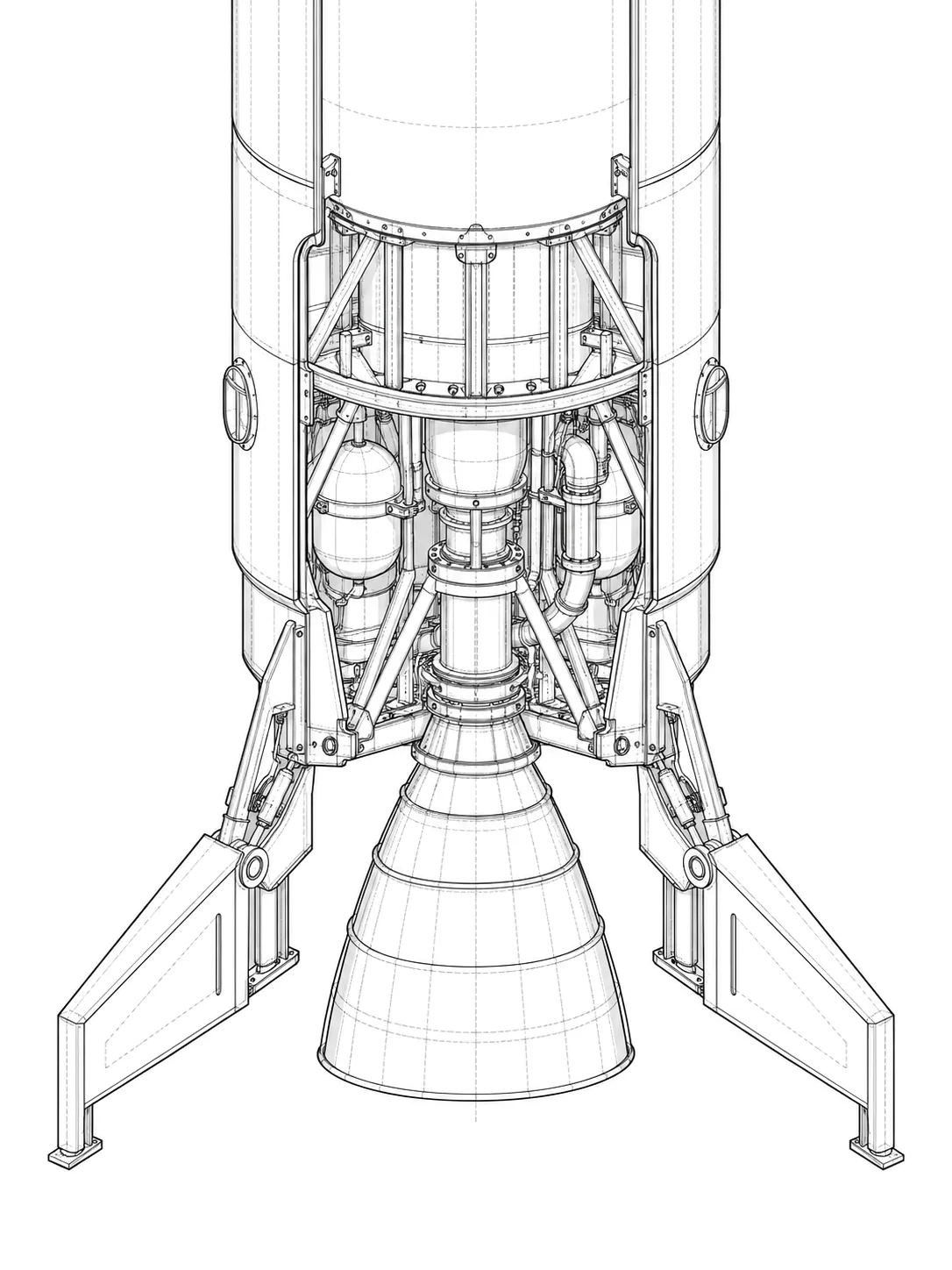



















Line drawing of a rocket's engine bay in cutaway, with one large nozzle and four landing legs splayed beneath it.

The AI operating system that runs your company on its own work

Phos AI Labs installs the connective layer between the tools your team already runs: your CRM, inbox, project manager, and docs. The company's own work keeps making the system sharper.

An AI operating system is the connective layer between the tools a company already uses, so AI reads from them, acts inside them, and writes what it learns back into the company's own knowledge. Every closed deal and shipped proposal makes the next task start smarter. The system learns because the company keeps working. The difference you feel first is that context stops being retyped. The company explains itself once, and every model connected to it starts from that floor.

OpenAI Select Partner and Claude Partner Network

Claude (Anthropic) Partner · Select OpenAI Partner · CCA-F certified team

  • 40+ AI Systems

    shipped to production in the last 6 months

  • ~6 weeks

    to your first working AI system

Trusted across 450+ builds

  • American Express
  • Coca-Cola
  • Sotheby's
  • Medtronic
  • Dataiku
  • Margaritaville
  • Zapier
  • Whitecoat Planning

Why does AI sit beside the work instead of inside it?

Because the way most companies use it is one person, one tab, one prompt at a time. Someone pastes in context, gets an answer, and closes the window. The work stays in the tools. Nothing carries forward.

  • Context pasted in every time

    The same background gets retyped every session by every person. The company explains itself to a model twenty times a day and the model never remembers.

  • Nothing writes back

    A good answer helps one person once. The proposal that won, the ticket that got resolved, and the deal that closed teach the system nothing.

  • Work still moves by hand between tools

    Meeting notes go into a doc, action items go into a project tool, follow-ups go into an inbox, and a person carries each one across.

  • No idea where AI is actually paying off

    Usage is invisible, so investment goes where it looks good in a deck instead of where the hours are actually coming back.

The usual advice is to consolidate before you automate. One ERP, one CRM, one clean data platform, then AI on top. That path costs years and most of a budget before anything works.

Agents handle two systems disagreeing about the same customer in a way older integrations never could. What you actually have to settle first is one definition of the process and one person who owns it. The systems can stay where they are.

AI takes the desk work. Your people keep the room.

Desk work is triage, drafting, summarizing, and routing, the work that used to live on a checklist. The operating system takes it off your team. Room work is judgment, trust, relationships, and the decisions that matter. The system gives the room back to the people who should be in it.

This engagement installs and connects. Every layer runs on the company brain underneath it, because a connective layer with nothing to connect to is a very expensive integration project.

What you walk away with

  1. 01

    Stack integrations

    Wiring into Slack, HubSpot, Monday, QuickBooks, your inbox, and your drive, so the AI works where the work already happens.

  2. 02

    Workflow agents

    Meetings produce action items, follow-ups get sent, reports draft themselves in your voice, and none of it waits for someone to remember.

  3. 03

    Private AI Workspace

    One shared environment with shared knowledge bases, skills, and projects, where the whole team works daily.

  4. 04

    Company Brain write-back

    Every closed deal, resolved ticket, and shipped proposal feeds back into the brain, so the system stays current on its own.

  5. 05

    Retrieval layer

    Structured retrieval across your documents and history, so answers cite your own material instead of general training data.

  6. 06

    Approval gates

    Consequential actions route to a person for sign-off. The system prepares and proposes; your team decides.

  7. 07

    Adoption and ROI dashboard

    Who is using AI, on what, how often, and which hours came back, department by department.

  8. 08

    Alerting and escalation

    What is stuck, what is overdue, and what needs a decision today, surfaced before it becomes a fire.

  9. 09

    Runbooks

    How each layer works, what it touches, and what to do when it misbehaves, written for your team.

  10. 10

    Monthly build queue

    The next highest-value connections and agents, re-ranked as the operation changes.

What actually happens once you start?

Foundation, connection, then the agents. Around six weeks to the first layer running, and it gets deeper every month after.

  1. 01

    We stand it on the company brain

    The operating system needs something to know. If the brain does not exist yet, that is the first build, because everything downstream reads from it.

  2. 02

    We connect the stack

    Your CRM, inbox, project manager, help desk, and drive get wired in, with your security team involved before anything touches production data.

  3. 03

    We install agents in the workflows

    One agent per job, placed where the desk work actually piles up, each built against a number so we can tell whether it is earning its place.

  4. 04

    We close the loop

    Every artifact your company produces writes back into the brain. The system gets better at your specific work without anyone maintaining it by hand.

  5. 05

    We measure, and we stay

    Adoption and returns get tracked by department, and the build queue gets re-ranked every month. Month six should be better than month one.

Where does this sit in the engagement?

  1. 01

    AI Consulting

    The audit that finds where AI belongs and what it is worth.

    See AI Consulting →
  2. 02

    AI Enablement

    Your team gets fluent on the work AI is about to touch.

    See AI Enablement →
  3. 03

    AI Implementation

    The operating system is the layer this phase builds toward.

    See AI Implementation →

This is for you if:

  • Your team uses AI in a browser and nothing carries forward.
  • The work moves between four tools by hand every day.
  • You want one system running the operation instead of six subscriptions.

This is not for you if:

  • You want a single integration and nothing after it.
  • Nobody has mapped how the company actually works yet, in which case start with the company brain.
  • Your stack is two tools and a spreadsheet.

What the operating system is built on and around

Two pieces sit underneath and inside it. One is the foundation it reads from, one is where your team actually works.

  • Company Brain

    The living map of how your company works. The operating system writes what it learns back into it, which is what makes the loop close.

  • Private AI Workspace

    One private, company-wide environment with shared knowledge, skills, and projects. The room your team works inside every day.

Why does the operating system get built differently in every industry?

A distributor's desk work piles up in quoting. A brokerage's piles up in renewals. A clinic's piles up in intake. The connections follow where the hours actually go.

What does this actually change?

Companies come to Phos AI Labs with AI in a browser tab and a stack that does not talk to itself. They leave with one system that runs the operation, learns from it, and shows them exactly what it is worth.

  1. 01

    The work stops being carried between tools

    Meetings produce action items, follow-ups go out, reports draft themselves. The handoffs that used to cost hours happen without a person in the middle.

  2. 02

    A system that sharpens itself

    Six months in, the operating system knows more about how your company works than any single person in it, because your company's own output keeps teaching it.

  3. 03

    Visibility on what AI is worth

    Adoption and returns are measured by department, so the next investment goes where the hours actually came back.

Does a connected system actually beat a chat window?

It shows up in three places: hours that come back once the tools talk to each other, revenue that appears when the system watches for it, and leadership finally seeing the operation in real time.

LOW/CODE Agency

CONTEXT

Client-call prep meant a full day pulling status from the project tool, searching Slack, reviewing call recordings, and checking Gmail.

WHAT PHOS AI LABS DID

Connected all of it into one daily intelligence layer that briefs the team before every call and flags escalations before they become fires. It returned 99.7 hours a week of recoverable time and $376,800 in identified annual value.

2,400 leads had been sitting in our pipeline for years. The AI read every thread, found 707 worth contacting, and had a personalized draft ready for each one. That pipeline existed in our data the whole time. We just never had the intelligence to see it.

— Jesus Vargas, Founder and CEO, LOW/CODE Agency

Read the full story →


Why Phos AI Labs over an integration platform or an internal build?

Phos AI Labs builds a layer that reads your business, acts inside it, and gets better because your company keeps working. That is a different outcome from connecting two apps and waiting for instructions, and the difference compounds every month.

  1. 01

    We build the foundation under the pipes

    Connections without context produce fast, confident, wrong output. We build the company brain underneath the integrations, which is why the answers hold up on real work.

  2. 02

    We have actually done this

    A new AI agency launches every week with a landing page and no case studies. Most have never connected an agent to NetSuite, Salesforce, or SAP inside a growing company. We have, again and again.

  3. 03

    The hire you can't make

    A senior AI lead costs $250,000+ and takes six months to find, and a system this connected needs more than one person watching it. Phos AI Labs embeds a full team the week you start.

How much does an AI operating system cost?

The AI operating system runs as a monthly engagement that typically costs $10,000 to $50,000 a month, depending on scope and how much of the operation it runs.

  • Operating system engagement

    from $10,000 /mo.

    Stack connected, agents installed in the workflows that cost the most, the write-back loop closed, and returns measured by department.

    Book a strategy call
  • Embedded AI department

    up to $50,000 /mo.

    Your full AI team on retainer, extending the operating system across the whole operation with the build queue re-ranked every month.

    Talk through scope

The growth you are chasing is often already funded. A company doing $5M+ in revenue usually carries three or four six-figure SaaS contracts each doing a fraction of what one connected layer could. Part of this work is finding that spend and redirecting it toward the systems that compound.

Keep going

The products this layer ships, and the fastest way to see where your hours are going.

  1. 01

    Nexus

    The private, company-owned AI workspace the operating system runs through.

    Explore →
  2. 02

    AI Employees

    Agents that own a role and run your repeat work around the clock, installed in the workflows the operating system connects.

    Explore →
  3. 03

    AI Readiness Voice Audit

    A three-minute voice-driven audit, the same interview method used in the full engagement, in miniature.

    Explore →
  4. 04

    Case Studies

    The full library of what Phos AI Labs has shipped, with the numbers behind each build.

    Explore →

In partnership with

  • Anthropic
  • OpenAI
  • Zo
  • Make

FAQs

What is an AI operating system?
An AI operating system is the connective layer between the tools a company already uses, so AI reads from them, acts inside them, and writes what it learns back into the company's own knowledge. Instead of AI being a tab someone opens, it becomes how the operation runs.
How is it different from just using ChatGPT or Claude?
An operating system sits inside the work: it reads from your tools, acts in them, and writes back to the company brain, so the next task starts smarter than the last. A chat window sits beside the work. You paste in context, get an answer, and close the tab, and nothing carries forward.
What is the self-improving loop?
Every artifact your company produces, a closed deal, a resolved ticket, a shipped proposal, a meeting transcript, feeds back into the system. The company brain stays current automatically and the agents get better at your specific work, so six months in the operation runs on something that knows more than any one person.
Which tools does it connect to?
The ones your business already runs on: Slack, HubSpot, Monday, QuickBooks, Zendesk, your inbox, and your drive, plus the systems of record like NetSuite, Salesforce, and SAP. Nothing gets replaced. The connections follow where your team's hours actually go.
How much does an AI operating system cost?
It runs as a monthly engagement that typically costs $10,000 to $50,000 a month, depending on scope. A full embedded AI department sits at the top of that range. We give you a specific number once we understand the stack and the operation.
Where does our data live, and does the AI act on its own?
Everything runs inside your environment with your access controls, and your security team is part of the setup before anything touches production data. Consequential actions route through an approval gate, so the system prepares and proposes and a person makes the call.
Do we need the company brain first?
Yes, and if it does not exist we build it as the first step. The operating system's advantage comes from knowing how your company works, so without that layer underneath it you get fast integrations producing confident, generic output.

The fastest way to know whether we're the right fit, is a conversation.

STEP 1/2 · ABOUT YOU