






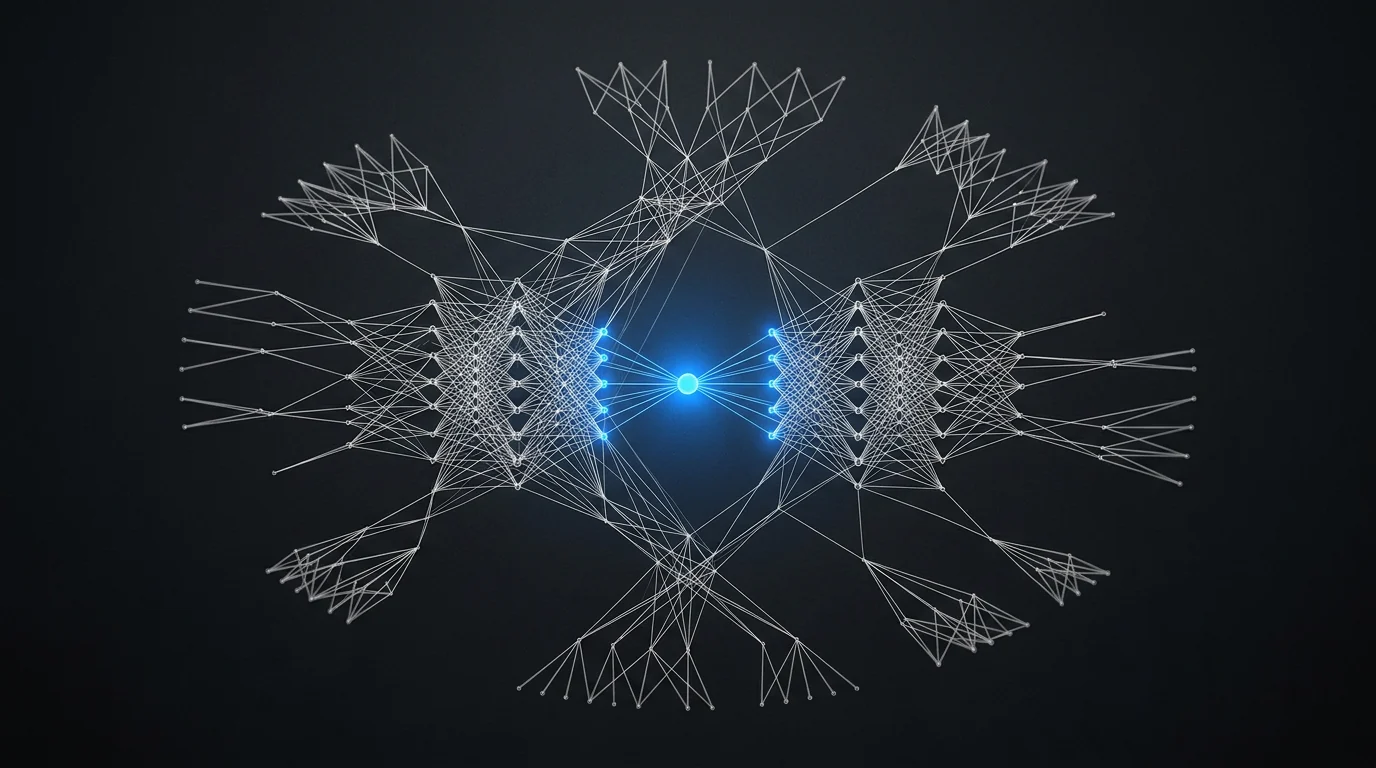










A production system built on OpenAI's models: text, voice, and image work wired through the API to a company's own data and tools.

OpenAI consulting to build products and infrastructure on OpenAI.

You have a product to make smarter or an internal system worth automating, and OpenAI's models can do it across text, voice, and images. Phos AI Labs is the AI department for $5M–$50M companies that turns that into a production system: the right model for each job, wired into your data and tools, built to run reliably and stay owned by you. As a Select OpenAI Partner, we build on the platform the way it is meant to be used.

OpenAI consulting turns OpenAI's models into a production system your business runs on: choosing the right model for each job across text, voice, vision, and image generation, wiring it to your data and tools through the API, and building the infrastructure around it so it holds up under real load. Here is what most firms miss. A demo that works once is easy. The hard part is the architecture that keeps it accurate, private, and affordable at scale. Phos AI Labs builds that part.

Anthropic and OpenAI

Select OpenAI Partner with a CCA-F certified team

  • 40+ AI systems

    shipped to production in the last 6 months

  • ~6 weeks

    to a working OpenAI system running in production

Trusted across 300+ builds

  • American Express
  • Coca-Cola
  • Sotheby's
  • Medtronic
  • Dataiku
  • Margaritaville
  • Zapier
  • Whitecoat Planning

Why do most OpenAI projects stall before production?

The demo is the easy part. A model that impresses in a meeting still has to become accurate on your real data, private enough for your security team, fast enough to use, and cheap enough to run at volume. That gap is where most projects stall, and it is exactly the part that is real engineering.

  • Demos that never reach production

    A proof of concept that impressed in one meeting and then stalled, because nobody built the architecture to make it accurate, secure, and cheap enough to run for real.

  • One model for every job

    Text, voice, and image tasks all forced through whatever model got picked first, so quality and cost end up wrong for most of the work.

  • A model that never saw your data

    OpenAI answering from general knowledge instead of your documents, orders, and records, so the output is generic and cannot be trusted for real decisions.

  • Cost and latency out of control

    Token bills climbing and responses lagging, because the system was built to work once in a demo instead of running efficiently at the volume your business needs.

What we do - What you get

A demo is easy. Production is the work.

This engagement turns OpenAI's models into a system that runs in production and stays owned by you. Six deliverables, each a named artifact your team keeps.

What you walk away with

  1. 01

    Model and Modality Plan

    The right OpenAI model chosen for each job across text, voice, vision, and image generation, with the cost and quality tradeoffs decided up front.

  2. 02

    Production Architecture

    The retrieval, prompting, and guardrail layers that keep answers grounded in your data and accurate under real load, built to your security requirements.

  3. 03

    API and Tool Integration

    OpenAI wired to your systems through the API and function calling, so the model reads and acts on your real data instead of working in a separate tab.

  4. 04

    Voice and Multimodal Interfaces

    Whisper, the Realtime API, vision, and image generation built in where they fit, so the system handles speech and images and not only text.

  5. 05

    Evaluation and Cost Controls

    A test suite that measures accuracy on your own tasks, plus the caching and model routing that keep token spend and latency in check.

  6. 06

    Owner's Manual

    Every model choice, prompt, and integration documented in plain language, with the code and setup fully owned by your team.

The build turns OpenAI's models into infrastructure your business runs on. You leave with the system, the code, and a partner who already knows your operation from the inside, ready to be your embedded AI team as the models keep changing.

How does an OpenAI build work?

Three phases, each earning the next. Weeks 1 to 2 pick the model for each job and design the production architecture around your data. Weeks 3 to 4 build the system and wire it to your tools through the API. From week 5, it is evaluated on your real tasks, tuned for accuracy and cost, and shipped.

  1. Weeks 1–2

    Scope and architecture

    Phos AI Labs finds where OpenAI's models create the most value, picks the model for each job, and designs the production architecture around your data and security.

  2. Weeks 3–4

    Build

    The system built and wired to your data and tools through the API, with retrieval, guardrails, and the voice or image pieces the product needs.

  3. Week 5 onward

    Harden and ship

    Evaluated against your real tasks, tuned for accuracy, cost, and latency, then shipped to production. Nothing moves to the next phase until the one before it proves itself.

What else does Phos AI Labs handle around an OpenAI build?

An OpenAI build rarely stands alone. Teams building on OpenAI often also want Claude for the jobs it does best, one set of rules across every model, or the wider generative program above all of it.

Why does building on OpenAI depend on your industry?

Same platform, different data and constraints. Healthcare needs policy and human review, financial advisory needs compliance-bound outputs, ecommerce runs on product and order data, logistics on real-time operations. The model choices and architecture are built around what your industry actually handles.

Don’t see your industry?

If your business has documents, conversations, or images worth turning into a product feature or an automated workflow, OpenAI's models have a place in it.

Book a call

What actually changes once the system is in production?

Three shifts: a product or workflow that runs for real instead of stalling as a demo, each job routed to the model that fits it, and infrastructure your team fully owns and can keep extending.

  1. 01

    A product that ships and holds up

    The AI feature or internal system runs in production and stays accurate under real documents and real load, instead of stalling as another demo.

  2. 02

    The right model for each job

    Text, voice, and image work each routed to the model that fits, so quality stays high and cost stays sane across the whole system.

  3. 03

    Infrastructure your team owns

    Every model choice, prompt, and integration documented and handed over, so the system keeps running and improving after Phos AI Labs leaves the room.

Does a real OpenAI build actually deliver?

It shows up in three places: the model doing real work, the architecture holding up under real documents, and the hours it gives back every week.

HRM Mexico

16 years of labor-law expertise, turned into an AI specialist.

The results from our increase in lead generation are outstanding. This is the perfect example of the importance of moving forward with an AI strategy. We feel very fortunate to have chosen Phos AI Labs as our partner. It has been a positive game changer for us.

Franklin Delano Frith II, Owner, HRM

Read the full story →
  • 250% more leads vs. the prior year
  • 0 hallucination, by architecture

Career Haven

An AI coach that held up under messy, real-world documents.

The goal is to show that we are drawing knowledge from experts all the time. It's not just what the AI is making up.

Ogo Ekwueme, Founder, Career Haven

Read the full story →
  • 40% less token usage after the backend refactor
  • 20 min of response lag eliminated entirely

Why Phos AI Labs to build on OpenAI instead of doing it in-house?

Most teams can wire up a demo. Making it production-grade is another skill set. Phos AI Labs is a Select OpenAI Partner that builds OpenAI systems to run for real and stays embedded as the models keep changing.

  1. 01

    Select OpenAI Partner, CCA-F certified

    Phos AI Labs holds Select OpenAI Partner status with a CCA-F certified team, both earned directly with OpenAI through real technical standing in how to build on these models. It is standing you cannot buy with a landing page.

  2. 02

    We build for production

    A generalist ships a proof of concept and moves on. Phos AI Labs builds the retrieval, guardrails, and cost controls that make an OpenAI system accurate, private, and affordable enough to run for real.

  3. 03

    Backed by 300+ software builds

    Phos AI Labs runs on LowCode Agency's engineering muscle, 300+ projects delivered, so your OpenAI system is engineered like real software and integrated into the tools your business already runs.

How much does OpenAI consulting cost?

An OpenAI consulting engagement with Phos AI Labs starts at $10,000 per month, scoped to the system being built. Every engagement covers the architecture, model and modality choices, integrations, evaluation, and documentation under a single monthly fee.

  • Focused OpenAI Build

    from $10,000 /mo.

    One high-impact product feature or internal system built on OpenAI's models and shipped to production, with the architecture and integrations it needs.

    Book a strategy call
  • Embedded AI Team

    from $10,000 to $50,000 /mo.

    Your full AI team on retainer: building, integrating, evaluating, and retuning across the whole operation as OpenAI's models and your business change.

    Talk through scope

Most OpenAI projects start with one system that pays for itself, then compound as the same architecture extends to the next workflow. Part of the engagement is finding the build with the fastest payback and pointing the budget at a system that keeps returning.

FAQs

What is OpenAI consulting?
OpenAI consulting is the strategy and engineering that turns OpenAI's models into a production system your business runs on. Phos AI Labs chooses the right model for each job across text, voice, and images, wires it to your data and tools through the API, and builds the architecture that keeps it accurate, private, and affordable at scale.
How is this different from a ChatGPT rollout?
A ChatGPT rollout puts your team on OpenAI's ready-made app. OpenAI consulting builds something custom on OpenAI's API and models: a product feature, an automated workflow, or internal infrastructure. If you want to deploy ChatGPT across your team instead, Phos AI Labs does that too, as part of its AI Enablement work.
Which OpenAI models and modalities do you build with?
The full platform: GPT models for text and reasoning, Whisper and the Realtime API for voice, vision for image understanding, and image generation. Phos AI Labs picks the model for each job based on the accuracy, speed, and cost the task needs, then combines them into one system.
Can you connect OpenAI to our own data and tools?
Yes. Phos AI Labs builds retrieval over your documents and records and uses function calling to connect the model to your systems, so it answers from your real data and can act inside your tools instead of working in isolation.
How do you keep it accurate and control cost?
Every build ships with an evaluation suite that measures accuracy on your own tasks, plus guardrails, caching, and model routing that keep answers grounded and keep token spend and latency under control as usage grows.
What does OpenAI consulting cost?
An OpenAI consulting engagement with Phos AI Labs starts at $10,000 per month, scoped to the system being built. The full Embedded AI Team runs from $10,000 to $50,000 per month. Every engagement includes the architecture, integrations, evaluation, and documentation under a single monthly fee.

The fastest way to know whether we're the right fit, is a conversation.

STEP 1/2 · ABOUT YOU