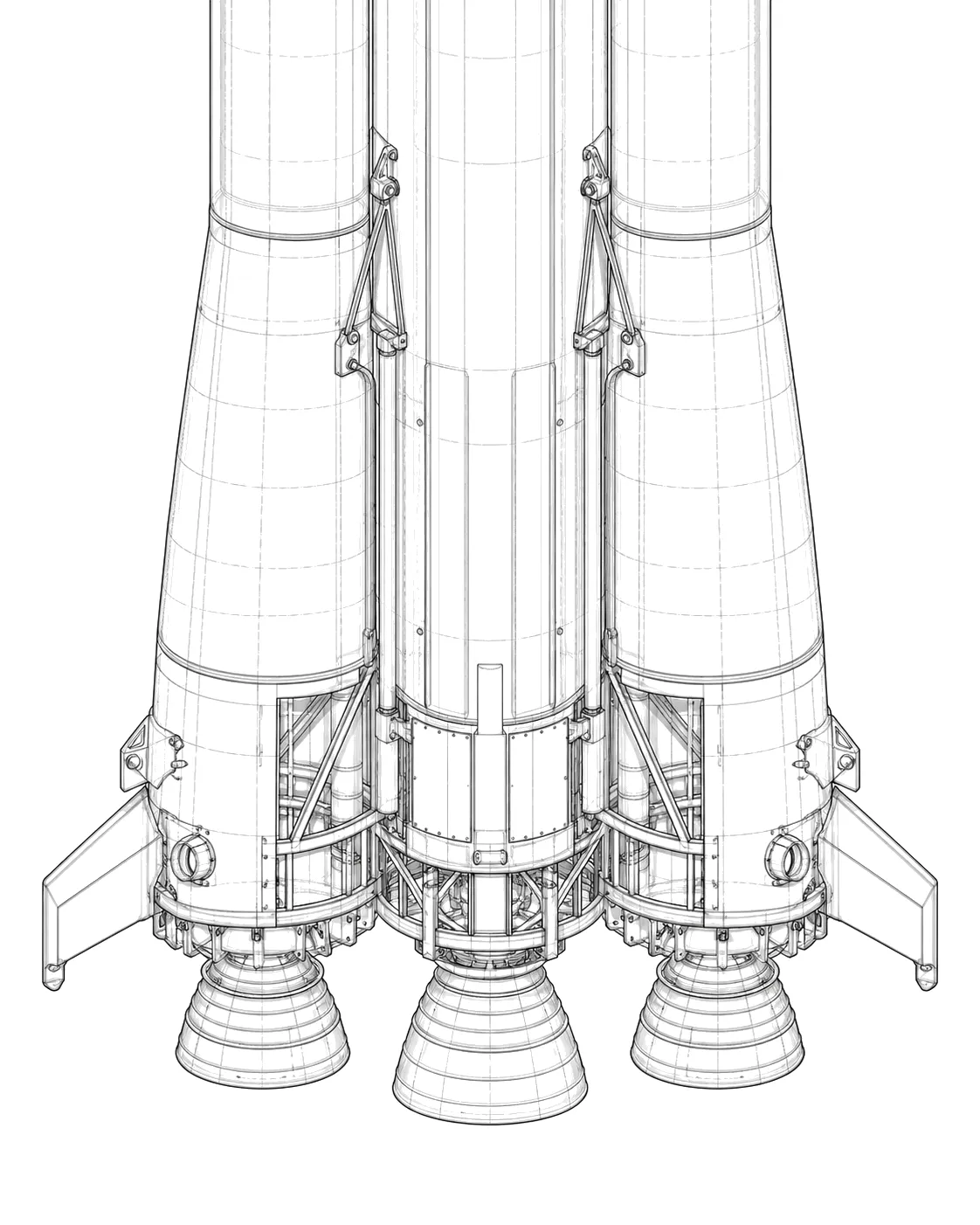

















Line drawing of the lower stage of a heavy rocket: a central core between two side boosters, each ending in an engine bell.

Enterprise AI consulting for AI that got ahead of you

Your people are already building with AI: in personal accounts, in apps nobody approved, and in a backlog where every proposal has a senior champion. Phos AI Labs maps everything in flight, writes the rules your security team will sign, and puts the first systems into production in the right order.

Enterprise AI consulting helps a large organization decide which AI work to build, in what order, and under which rules, then gets it running in production with the security and ownership a big company needs. In Gartner's 2026 survey of more than 2,000 CIOs, 71% expected to deploy agentic AI within 12 months, and only 21% had governance for it. Phos AI Labs closes that gap before the agents arrive.

OpenAI Select Partner and Claude Partner Network

Claude (Anthropic) Partner · Select OpenAI Partner · CCA-F certified team

  • 4 systems live

    within 90 days of an 800-person firm approving its roadmap

  • 40+ AI systems

    shipped to production in the last 6 months

Trusted across 450+ builds

  • American Express
  • Coca-Cola
  • Sotheby's
  • Medtronic
  • Dataiku
  • Margaritaville
  • Zapier
  • Whitecoat Planning

Why do enterprise AI programs stall between pilot and production?

Deloitte's 2026 State of AI in the Enterprise found only 25% of organizations had moved 40% or more of their AI pilots into production. In the programs we see, three things hold them back: nobody owns the build, there is no intake step, and the security review was never designed for AI.

  • Shadow AI with real company data

    People run client work through personal ChatGPT and Claude accounts. In one five-country group we worked with, 68% of staff used personal accounts and 9% had ever seen a written AI policy.

  • Builds nobody owns

    An engineer ships an internal finance tool without a security review. A department publishes an app on a platform IT doesn't manage. When the builder leaves, the context leaves too.

  • Two people approve everything

    A COO and a head of AI are the only people who understand both the business and the technology. Every build, policy question, and architecture call waits on their calendars.

  • A backlog with a champion behind every item

    Thirty-three proposals, each pushed by someone senior, with no agreed criteria for what moves first. The loudest request gets the engineers.

Gartner predicts that by 2028, 70% of enterprises will abandon agentic AI built by a vendor's forward-deployed engineers, because they can't afford to run it or change it on their own. Phos AI Labs builds in your accounts and documents every system for your team from the first week.

Enterprise AI moves at the speed of its intake process

Most organizations have no step between an idea and an engineer. A business user describes what they want, someone builds what they heard, and the process has changed by launch day.

Phos AI Labs puts that step in first: a short intake, a small triage group, written requirements, and a production standard every tool meets before it goes live. Then we rank the backlog and build.

What you walk away with

  1. 01

    AI activity inventory

    Every active and proposed AI build, who owns it, what data it touches, and where it runs, including the ones IT didn't know about.

  2. 02

    Department readiness calls

    One call per department: ready to build, document the process first, or replace a contract.

  3. 03

    Build intake and triage

    A request form that takes under 15 minutes, and a two-person review before any engineering time is spent.

  4. 04

    Production standard

    Single sign-on through your identity provider, role-based access tied to your HR system, data residency in your infrastructure, and a named owner for every tool.

  5. 05

    AI use policy

    When AI can be used, with which data, in which tools. Written with your leaders and loaded into the tools so they flag a violation.

  6. 06

    Use-case registry

    Status, owner, integration dependencies, and adoption for every build, in one view leadership can read.

  7. 07

    Sequenced roadmap

    The backlog cut to what is ready, each build cleared against four gates: a mapped process, a named owner, success criteria, and an integration point.

  8. 08

    Model and data plan

    Which model handles which job, through which provider, under which data agreement, chosen per use case.

  9. 09

    Contract review

    Software contracts doing a slice of the job, with a call on each: keep, renegotiate, or replace.

  10. 10

    Handover pack

    Architecture, runbooks, prompts, and access, documented so your team can run or change any system without us.

What actually happens once you start?

Enterprise discovery is scoped to the teams and systems involved. In our reference engagement, an 800-person firm across 14 countries went from kickoff to a governed roadmap in 14 weeks.

  1. Weeks 1 to 2

    Look before building

    Discovery sessions with each department head, AI voice interviews with the people doing the work, and a review of every build already in flight. Read-only access to systems, nothing more.

  2. Weeks 3 to 8

    Rules and readiness

    The intake process, production standard, and AI use policy go live. Every department gets its readiness call, and your security team reviews the standard before anything is built against it.

  3. By week 14

    A sequenced roadmap

    The backlog is ranked against the four gates. The first build in each department is chosen to show a result within 30 days, because trust has to be earned before the bigger systems.

  4. After approval

    Build and hand over

    Production builds start in the agreed order. Every system ships with a named owner, monitoring, and documentation your team can run.

What else does an enterprise engagement draw on?

Governance and company-wide rollouts often run alongside the roadmap. Some divisions are better served by the mid-market engagement.

  1. AI Governance

    Policies, intake, and production standards your teams follow because they are short enough to use.

  2. Claude Consulting

    An Anthropic partner rollout across the company: single sign-on, permissions, and shared context set up before the seats go out.

  3. Mid-market AI consulting

    For a single business unit or a company without a security review process, the leaner engagement starts at $10,000.

Why does enterprise AI start differently in every industry?

A food manufacturer with 251 plants starts with one site and copies what works. A professional services firm starts with the backlog its partners already argue about. A healthcare organization starts with what is allowed to touch patient data.

What does this actually change?

  1. 01

    Leadership can see everything in flight

    One registry shows every build, its owner, its data, and its adoption. In our reference engagement, the COO's review load went from a constant bottleneck to a 30-minute weekly check.

  2. 02

    Builds that clear security once

    Every tool meets the production standard by design, so security reviews the standard one time and each build inherits it.

  3. 03

    Departments build without waiting on the top

    Intake and triage carry the decisions that used to wait for two people. Each department that ships becomes the reference for the next one in line.

Does it hold up at enterprise scale?

International professional services firm

CONTEXT

About 800 people across 14 countries, with AI activity everywhere: personal accounts, an internal finance tool shipped without review, department apps on unmanaged platforms, and 33 proposed builds.

WHAT PHOS AI LABS DID

Two weeks of discovery across five departments with AI voice interviews, then an intake and triage process, a four-criteria production standard (single sign-on through Microsoft Entra ID, role-based access tied to HR, data residency, a named owner), and a roadmap built against four gates.

RESULT

33 proposals cut to 8 sequenced builds, 4 systems live within 90 days of approval, and the COO's review load down to a 30-minute weekly check. One department cut a six-figure contract it was using at half capacity.

We came in thinking we needed someone to build things faster. What we actually needed was someone to tell us which things were worth building, and in what order. That clarity was the work. Everything after it moved quickly because we stopped second-guessing the sequence.

— COO, professional services firm, 800 people across 14 countries

Read the full story →


Why Phos AI Labs over a Big Four firm or a platform vendor's own team?

  1. 01

    The same team builds what it recommends

    Phos AI Labs runs discovery and puts the first systems into production with the same consultants and engineers. Implementation typically runs $10,000 to $50,000 a month, priced to what is being built.

  2. 02

    No platform to sell you

    We are a Claude (Anthropic) Partner and a Select OpenAI Partner, and we earn no reseller commissions. Copilot, Claude, ChatGPT, Gemini, or open models each get picked per use case, on accuracy and cost.

  3. 03

    Built to be handed over

    Everything is work for hire, in your cloud, your repositories, and your identity provider, and documented so your team can run it, change it, or move it.

How much does enterprise AI consulting cost?

Enterprise discovery with Phos AI Labs is scoped to the number of teams and systems involved, and starts above the $10,000 entry price for smaller companies. After discovery, ongoing implementation typically runs $10,000 to $50,000 a month, depending on how many builds run at once.

  • Scoped discovery

    priced to Your scope fixed after the first call

    Inventory, readiness calls, intake and production standard, AI use policy, and the sequenced roadmap. You get a fixed price after the first scoping call, and you own every deliverable.

    Start here
  • Implementation

    from $10,000 /mo.

    Up to $50,000 a month. Production builds in roadmap order, with your security team in the setup, monitored and improved as they run. The number scales with how many builds are in flight.

    Book a call

Large organizations often fund the roadmap from contracts they already have. In our reference engagement, one department paid a six-figure annual contract for software it used at half capacity. A custom agent connecting its real data sources cost less to build once than one year of that contract.

Keep going

The reads an enterprise team asks for before the first call.

  1. 01

    The 800-person firm case study

    33 proposals cut to 8 builds, with four systems live in 90 days.

    Explore →
  2. 02

    AI Governance

    How Phos AI Labs writes policy and production standards people follow.

    Explore →
  3. 03

    Private AI Workspace

    One company-owned AI environment with your access controls, your data, and usage you can see.

    Explore →
  4. 04

    Case studies

    What Phos AI Labs has shipped, with the numbers behind each build.

    Explore →

In partnership with

  • Anthropic
  • OpenAI
  • Zo
  • Make

FAQs

What is enterprise AI consulting?
Enterprise AI consulting helps a large organization decide which AI work to build, in what order, and under which rules, then gets it running in production. At Phos AI Labs that means an inventory of everything in flight, a production standard your security team signs, a ranked roadmap, and the first builds.
What should an enterprise AI strategy include?
An enterprise AI strategy names the outcomes AI is for, the rules it runs under, and the order of the builds. At minimum it has an inventory of what already runs, an AI use policy, a production standard for access and security, a ranked roadmap with named owners, and the KPIs that tell you each build is done.
How do you handle security, single sign-on, and data residency?
Through a production standard every tool meets before launch: single sign-on through your identity provider, role-based access tied to your HR system, data kept in your infrastructure, and a named owner. Access starts read-only, every write is logged, and models run under your data agreements, for example through Amazon Bedrock or Azure.
Do you work with our IT and security teams?
Yes, from the first week. IT and security approve access, review the production standard, and sit in the setup for every build. Operations owns the business case and the roadmap. Phos AI Labs works alongside your teams and never asks to take over systems they run.
How long until something is in production?
It depends on scope, and the first build per department is chosen to show a result within 30 days of the roadmap's approval. In our reference engagement, an 800-person firm reached a governed roadmap in 14 weeks and had four systems live within 90 days of approving it.
How much does enterprise AI consulting cost?
Enterprise discovery with Phos AI Labs is scoped to the number of teams and systems involved and starts above the $10,000 entry price for smaller companies. After discovery, ongoing implementation typically runs $10,000 to $50,000 a month, depending on how many builds run at once.
Are you tied to Microsoft, OpenAI, or Anthropic?
No. Phos AI Labs is a Claude (Anthropic) Partner and a Select OpenAI Partner and earns no reseller commissions. We work inside Microsoft 365, Copilot, and Azure when that is your stack, and pick the model per use case on accuracy and cost.
What happens when the engagement ends?
Your team keeps running everything. Every build is work for hire in your accounts, with architecture notes, runbooks, prompts, and access documented. Most clients keep a smaller support plan with Phos AI Labs because models and APIs keep changing, and nothing stops you from handing it to your own team.
Can we start with one business unit?
Yes, and large organizations often should. A single division or site gives you a working standard and a first result without a company-wide program. Once it works, the same intake, standard, and roadmap method copies to the next unit, which is cheaper and faster the second time.

The fastest way to know whether we're the right fit, is a conversation.

STEP 1/2 · ABOUT YOU