AI for property management companies, built for maintenance operations, asset management, facility coordination, and lease administration
Your team knows how to run assets and serve tenants. Phos AI Labs handles the coordination, documentation, and data work that runs alongside every property, every maintenance cycle, and every lease. Your people stay focused on the decisions that protect asset value and grow the portfolio.
What does AI for property management companies actually do?
AI for property management companies is the use of AI on the operational layer that keeps assets performing and tenants satisfied: maintenance coordination, work order management, asset lifecycle tracking, lease administration, facility reporting, and compliance documentation, with every strategy decision, tenant relationship, and judgment call left to your property managers, asset managers, and facility leaders.
Phos AI Labs runs that work inside governed, auditable workflows so the portfolio stays the priority.

How does AI improve maintenance performance, asset management, and portfolio operations?
-
65%
Increase in data modernization and AI investment as property management organizations respond to operational intelligence demands
IDC tracks a 65% increase in data modernization, security, and AI investments across property and facility management organizations. The shift treats data as the operational foundation for predictive maintenance, real-time asset visibility, and tenant experience intelligence.
IDC, AI-Enabled Enterprise Asset Management and Smart Facilities Strategies, 2025
-
75%
Reduction in property operations administrative time when manual coordination is replaced with automated workflow management
Replacing manual coordination workflows with automated operational systems delivers up to 75% reduction in administrative time, redirecting hours back to asset management and portfolio growth decisions.
Industry benchmark, property and real estate operations
-
25%
Forecast increase in tenant and occupant satisfaction through AI-enabled personalization and proactive service delivery
Proactive service powered by connected property data is forecast to increase occupant satisfaction by 25%, requiring a unified real-time view connecting property systems, tenant profiles, maintenance histories, and on-property interactions.
Agentic AI Research, Hospitality and Property Management, 2025


Trusted across 450+ builds by the LowCode Agency team








Why do most property management AI projects never leave the pilot?
IDC is specific about the prerequisite: asset data, maintenance records, space utilization, and tenant history have to be connected before AI can surface anything worth acting on. Most portfolios are not there yet. That gap is what stalls the work.





The AI decisions property management leaders are working through right now
These are the calls the operators moving fastest made early.
- Decision 01
Which part of the operation do we address first?
Request intake, work order coordination, vendor administration, lease critical dates, and owner reporting have five different payback profiles. Intake and owner reporting return time fastest; predictive maintenance needs the most prepared data. The right sequence is answerable in two weeks against your actual data.
- Decision 02
Build, buy, or partner?
Your platform's own modules ship this quarter and a built layer fits your unit naming, your approval chain, and the way your owners want to be reported to. The platform usually covers the record of truth; what it leaves uncovered is the coordination between it and everything else.
- Decision 03
How do we keep our people on every tenant and asset decision?
Tenant relationships, habitability judgments, capital decisions, and anything touching who gets a home are the calls a property management company exists to make. The operators that scale defined up front where AI intakes, routes, drafts, and reports and where a person decides.
- Decision 04
How do we prove this paid for itself?
Time to first response and time to resolution are the honest first metrics; they only mean something if the baseline was measured before anything went live. Manager hours recovered, owner-report turnaround, and work orders closed without a second visit are the ones an owner will feel. Pick two before the build starts.
- Decision 05
When do we move from pilot to production?
The difference between operators in production and ones still piloting is rarely the technology. It is a defined boundary, a connected data foundation, a redesigned workflow, and a named owner.
Where Phos AI Labs runs the maintenance, leasing, and asset work so your team stays on the portfolio
Eight operational areas. One connected layer. Your team stays on the decisions that build portfolio value.
- 01
Maintenance coordination and work order management
Routes work orders, coordinates scheduling, tracks contractor assignments, and manages maintenance documentation across every property. Requests logged, assigned, and tracked automatically. Your managers stay on vendor relationships and tenant communications.
-
 02
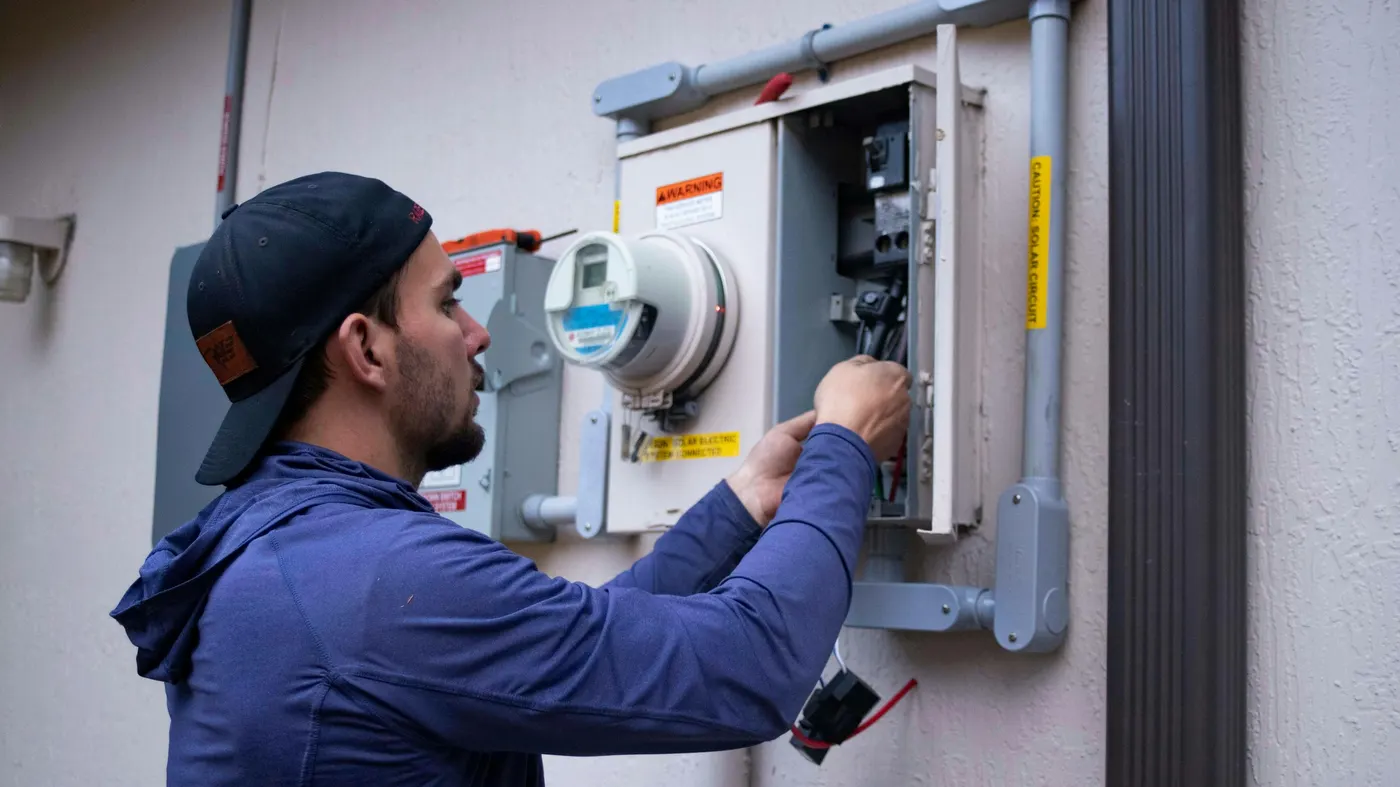
02Asset lifecycle tracking and predictive maintenance
Tracks asset performance, maintenance histories, and lifecycle records. Maintenance needs surface before failures occur. Your asset managers stay on capital planning and portfolio strategy.
- 03
Lease administration and compliance documentation
Processes lease data, tracks critical dates, manages renewals, and maintains compliance documentation. Nothing falls through the cracks on a renewal or a regulatory deadline. Your managers stay on the tenant relationships that drive occupancy and revenue.
- 04
Facility reporting and operational intelligence
Generates performance reports, surfaces operational insights, and tracks KPIs across every property and asset class. Leadership receives clean, connected data when decisions need to be made.
-
 05
05Request intake and triage
Reads a request however it arrives: portal, email, text, or call summary. Identifies the property and unit, classifies urgency, and opens the work order ready for a contractor. Anything reading as a habitability or life-safety issue goes to a person immediately. The tenant gets acknowledgment and updates without a manager typing them.
- 06
Vendor and contractor administration
Tracks certificates of insurance, license expiry, and approved rate schedules. Matches every invoice to its work order and flags scope changes, duplicate billing, and above-rate charges before approval. Vendor selection and every payment approval stay with your team.
- 07
Owner reporting and budget variance
Assembles the monthly report: income and expense against budget, occupancy, open work, and variance explained by the actual work orders that caused it. The pack that consumed the first week of every month arrives drafted. Your managers own every owner conversation.
- 08
Company knowledge for property and facility teams
Lease clauses, building systems history, vendor terms, and operating procedures answerable in plain language, with the source attached, from the office or a unit.
AI prepares:
- Work orders routed, scheduled, and tracked across every property in the portfolio.
- Asset performance data, maintenance histories, and lease records maintained inside governed workflows.
- Facility performance reports and operational KPIs assembled across every property and asset class.
Property managers decide:
- Every tenant relationship and the trust it depends on.
- Every asset investment decision and capital planning call.
- Every portfolio strategy call that determines how the business grows.
- Who gets a home, the rent, and the renewal terms; screening never runs on the AI layer.
- Every habitability and life-safety call, which escalates to a person the moment a request reads that way.
How do property management companies implement AI across maintenance, assets, and lease operations?
Three steps. No disruption to active property operations. Your team stays focused on tenants and assets from day one.

- Step 1
AI Readiness Audit
We map where coordination, documentation, and reporting hours are going across your operation, identify what AI can own, and rank workflows by value and readiness. The standalone audit runs 2 weeks. A full multi-department audit runs 3 to 6 weeks.
- Step 2
AI Foundation
We build inside your existing systems. Property management platforms, maintenance tools, asset tracking, lease administration software, and compliance documentation connected and configured before anything goes live.
- Step 3
AI Implementation
Your property managers, asset managers, and facility leaders get hands-on integration with every workflow Phos AI Labs now runs. We measure maintenance response time, lease administration accuracy, and asset tracking completeness from the first week.
What does responsible AI in a property management operation actually require?
Security stops attacks. Compliance satisfies a regulator, an owner, or an insurer. Governance decides what is approved before any of them is tested. When the AI layer touches a tenant's home, an owner's money, and a building's safety record, all three have to be right before anything goes live.
- 01
Your people on every tenant and asset decision.
AI intakes, routes, tracks, drafts, and reports. Tenant selection, rent and renewal terms, vendor selection, and capital decisions stay with a person, with the reasoning captured so a decision can be explained to an owner or a court a year later.
- 02
Nothing decides who gets a home.
Applicant screening, tenancy pricing, and the terms a household is offered carry tenant-protection obligations and real fairness exposure. They stay off the AI layer entirely. Phos AI Labs builds the administration around leasing; the decision about a person’s housing belongs to a person.
- 03
Habitability and life safety escalate to a human immediately.
A model can categorize a request and it should never be the last thing that reads one. Every workflow routes anything reading as a life-safety, health, or habitability issue straight to a person with the original text intact, and logs that it did.
- 04
Tenant, owner, and vendor data stays inside your environment.
Applications, payment details, maintenance requests, and owner financials do not leave a governed boundary or reach a public model. The most common leak is a manager pasting a tenant complaint into an unmanaged consumer chatbot; a governed rollout removes that path.
- 05
SOC 2 and the reviews owners, lenders, and insurers run.
You are already accountable to third parties for how you hold their data and their assets. Every system Phos AI Labs deploys is built to move your certification path forward and to make an owner's or an insurer's questions about AI answerable.
What you get from a Phos AI Labs property management engagement
Every engagement produces something your team owns, understands, and can run from day one.
AI Readiness Report.
Where AI belongs across your operation, ranked by value and sequenced by readiness, with the data that has to be connected first and the decisions that stay with your people.
Compliance and governance framework.
Your AI use mapped against your tenant-data obligations and owner and insurer commitments; escalation paths for habitability and life safety, audit trails, review gates, your SOC 2 path, and a runbook that stays current as tools and rules change.
Built and deployed systems.
Request intake and triage, work order coordination, vendor administration, lease critical dates, owner reporting, or a property knowledge base. Live, tested, and adopted before we leave.
Team training and enablement.
Your property managers, maintenance coordinators, and facility staff trained on the tools they use daily, built around your workflows and escalation rules.
A governance owner and runbook.
Who owns AI governance inside your organization, and the documentation that keeps it running as portfolios, vendors, and rules change.
Why do property management leaders choose Phos AI Labs to build AI into their operation?
As a Claude (Anthropic) Partner and Select OpenAI Partner with 450+ builds behind the team, Phos AI Labs brings the property management workflow knowledge to ship AI that stays in production and keeps every tenant relationship, asset investment decision, and portfolio strategy call with your team.
- 01
We build the systems we scope.
Most AI advice comes from people who have never shipped into a working property management operation. Phos AI Labs ships systems wired to your property management platforms, maintenance tools, asset tracking systems, and lease administration software. Review gates built in from day one. We ship what we recommend.
- 02
We know where the line is.
We put AI on maintenance coordination, asset lifecycle tracking, lease administration, and facility reporting. Every tenant relationship, asset investment decision, and portfolio strategy call stays with your team. A confident wrong answer on a maintenance or lease decision is a tenant relationship and compliance event.
- 03
The hire you can't make.
There is no full-time role for someone who knows property management operations, asset lifecycle management, AI architecture, and change management well enough to ship a system your team actually uses. Phos AI Labs is that capacity, without the overhead of a permanent hire.
This is a good fit if:
- Your team spends significant hours on maintenance coordination, work order routing, lease tracking, and compliance documentation.
- You manage multiple properties and need operational updates running automatically across the full portfolio.
- You need AI that works inside your existing property management and asset tracking systems.
- You want measurable outcomes across maintenance performance, lease administration, and asset lifecycle management.
- You are ready to move from reactive maintenance to a predictive, connected operational layer.
This is not a good fit if:
- You want AI making tenant relationship decisions, asset investment calls, or portfolio strategy decisions.
- You are looking for a standalone property management tool your team adopts without a structured implementation process.
- You are not ready to connect your maintenance, asset, and lease data into a unified operational foundation.
- You are not ready to change how coordination and administrative workflows run across your portfolio.
How much does property management AI consulting cost?
Every engagement is scoped on a call, priced by the size of your portfolio, and structured so each phase funds the next.
Every engagement starts by finding where current spend, on coordination hours across every property, the first week of every month lost to owner reporting, invoices approved above the agreed rate, and emergency callouts a caught early-warning would have prevented, can be redirected into systems that compound. The AI Readiness Audit finds that budget before we ask you for new budget.
- Explore the audit
Tier 1
AI Readiness Audit
from $10,000 fixedThe starting point.
Map where coordination and administration hours go, identify where AI creates real value, and deliver a prioritized roadmap with escalation rules and the decision boundary built in. 2 weeks standalone, 3 to 6 weeks for a full multi-department audit.
- Explore AI Foundation
Tier 2
Phase 1 Build
from $15,000 /mo.Request intake and triage, work order coordination, vendor administration, or owner reporting. Built, deployed, and adopted.
- Explore AI Consulting
Tier 3
Embedded AI Department
up to $50,000 /mo.Phos AI Labs as your property management AI team: strategy, implementation, governance, and iteration as the portfolio grows.
- Explore Nexus →
Nexus, the Private AI Workspace
From $500/mo per company, plus tokens.A secure AI workspace for your property and facility teams, with lease clauses, equipment history, vendor terms, and operating procedures answerable in plain language and tenant data kept inside your boundary.
- Explore AI Employees →
AI Employees
$2,500/mo per role, all-inclusive.Autonomous agents running complete operational workflows end to end, such as request intake and triage or owner reporting.
Keep going
- 01
AI Implementation Timeline for Property Management
What AI implementation actually looks like for property management companies, how long each phase takes, and what your property managers, asset managers, and facility leaders should expect at every step.
Explore → - 02
Best Claude Implementation for Property Management
How property management companies are evaluating Claude implementation partners in 2026 and what separates the firms delivering connected operational systems from the ones deploying isolated tools onto fragmented property management workflows.
Explore → - 03
AI for Field Service Organizations
How Phos AI Labs builds for field service operations: intelligent scheduling, predictive maintenance, parts forecasting, and technician knowledge support that keeps field teams focused on first-time resolution and asset performance.
Explore → - 04
AI Consulting
AI consulting that starts where your team already is. Phos AI Labs audits where AI belongs, builds the highest-value systems, and embeds as your AI team. Audit from $10K.
Explore → - 05
AI Governance
AI governance is the set of rules, access controls, and review steps that decide who can use AI, on what data, and how it gets shipped, installed inside a company's own tools and data.
Explore → - 06
Nexus, the Private AI Workspace
Nexus is a private, company-owned AI workspace grounded in your business knowledge. Rolls out in a couple of weeks. From $500/mo, priced by company.
Explore → - 07
AI Employees
An AI Employee is a trained digital worker that runs your recurring work inside your own tools. Rolls out in 3 to 4 weeks. From $2,500/mo per role.
Explore → - 08
AI Readiness Scorecard
Two free tools to benchmark your AI readiness: a 10-step scorecard and a 3-minute voice audit. Personalized priorities, no sales call required.
Explore →
In partnership with