The problem
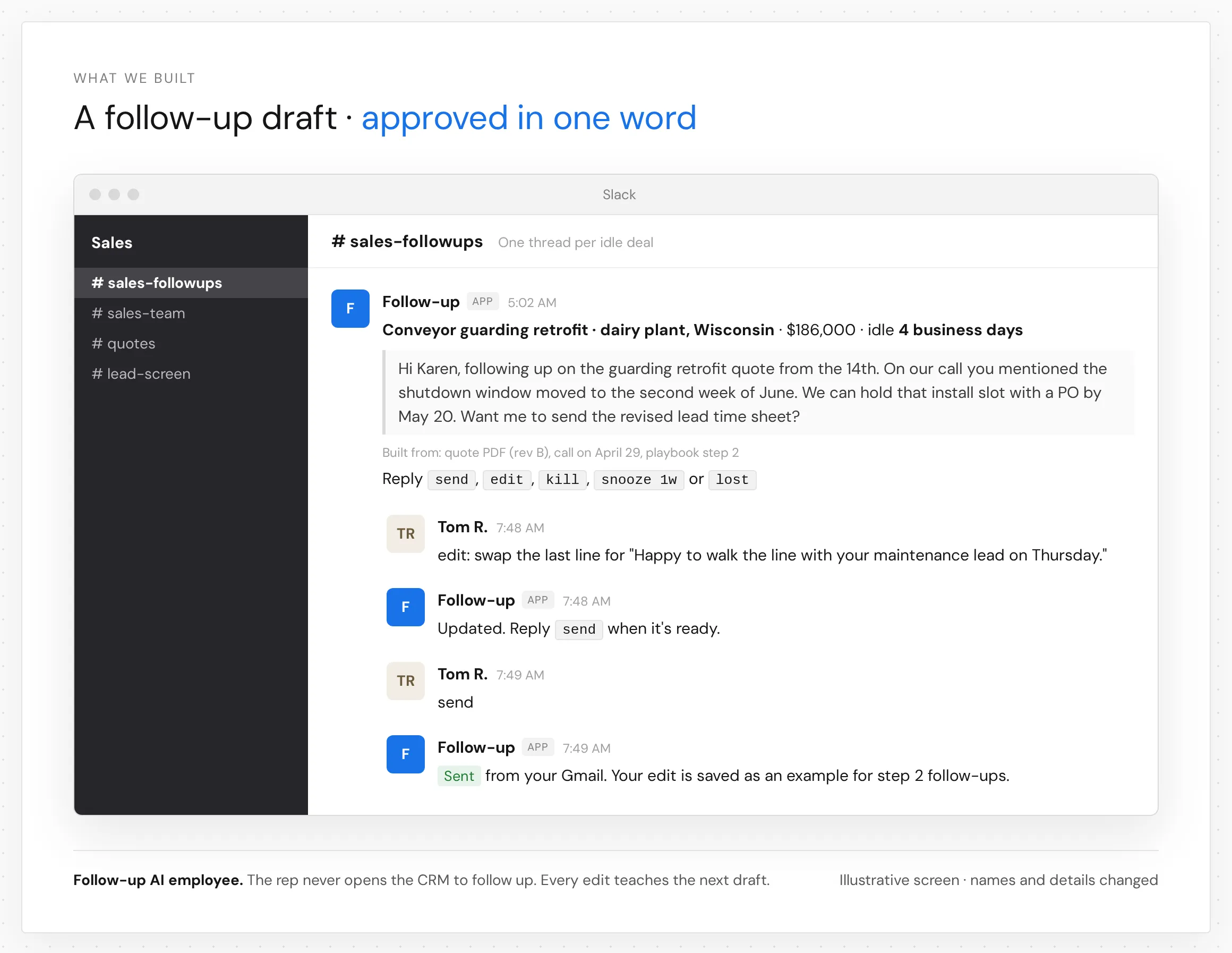
In March, a food processor in Indiana bought a conveyor line retrofit from a competitor. The quote from our client had gone out 23 days earlier. Nobody had called back.
The VP of Sales found out from a LinkedIn post. The plant engineer had thanked the other vendor for “staying on top of it.” The deal was worth $410,000.
The reps were good. Nine of them were carrying 400 open quotes in HubSpot, a shared inbox, and their own memory. Follow-up happened when someone remembered, and memory loses to a busy week.
The VP knew the pattern. Quotes went out, engineers went quiet while they compared vendors, and whoever followed up with a useful answer usually won. The team quoted well. It just didn’t follow up.
Where Phos AI Labs came in
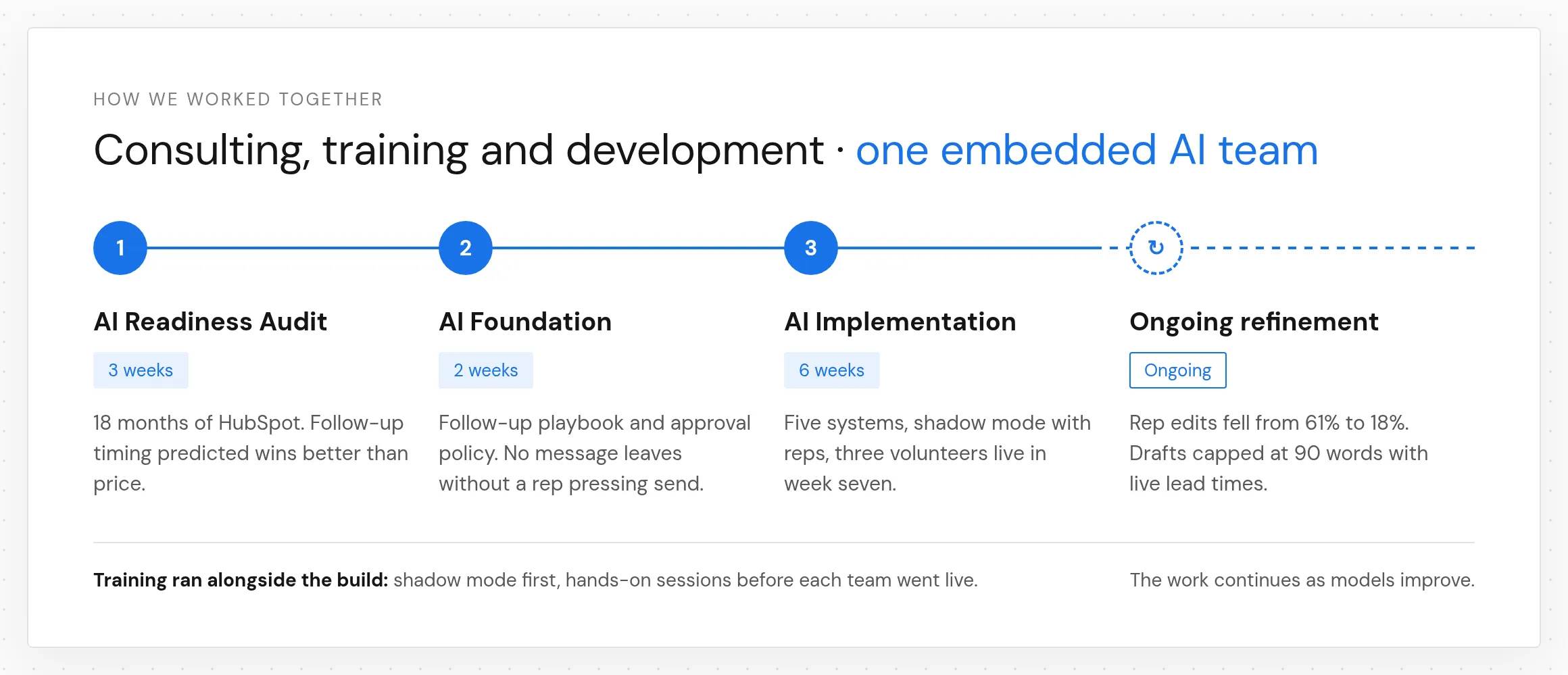
Phos AI Labs started with a three-week AI Readiness Audit. We interviewed all nine reps, the sales manager, and the inside sales coordinator. We sat in on two pipeline meetings.
Then we read the data. We pulled 18 months of HubSpot history, 60 full email threads on won and lost deals, and the call recordings sitting in Zoom that nobody had time to rewatch.
Three findings shaped everything after. Follow-up timing predicted wins better than price did. Call notes never reached the CRM. And 2,100 trade show leads from the last two years had never received a second email.
The baseline
We measured everything before proposing anything. The numbers became the scoreboard for the whole engagement.
| KPI | Baseline |
|---|---|
| Quotes followed up within 3 days | 34% |
| Median days of silence on an open quote | 9 |
| Open quotes with no activity in 21+ days | 140 of 412 |
| Quote-to-order rate on deals that went quiet | 19% |
| Rep hours per week on CRM upkeep | 14 |
| Historical leads ever revisited | 0 of 2,100 |
The 14 hours stood out. Reps spent almost two days a week copying call notes and updating stages. Every one of those hours came straight out of selling.
Setting the foundation
The AI Foundation phase took two weeks. We sat with the VP of Sales and wrote down what a good follow-up looks like at this company, because nobody had ever written it down.
The playbook covers tone, length, what a follow-up must include, and when to attach a product video. It also lists the deals the VP wants to see personally: anything over $250,000 or any customer older than ten years.
We wrote the approval policy into the same document. No message reaches a customer without a person pressing send. Every system we built later reads from this playbook first.
Deciding what to build
With the baseline and the playbook in hand, the Phos AI Labs engineering team joined the account. Their job was to decide what kind of system each problem needed, because each problem needed something different.
We looked at two common options first. A sales sequence tool would send the same three emails regardless of what the engineer had asked on the call. A fully autonomous AI SDR could quote the wrong lead time to a 20-year customer.
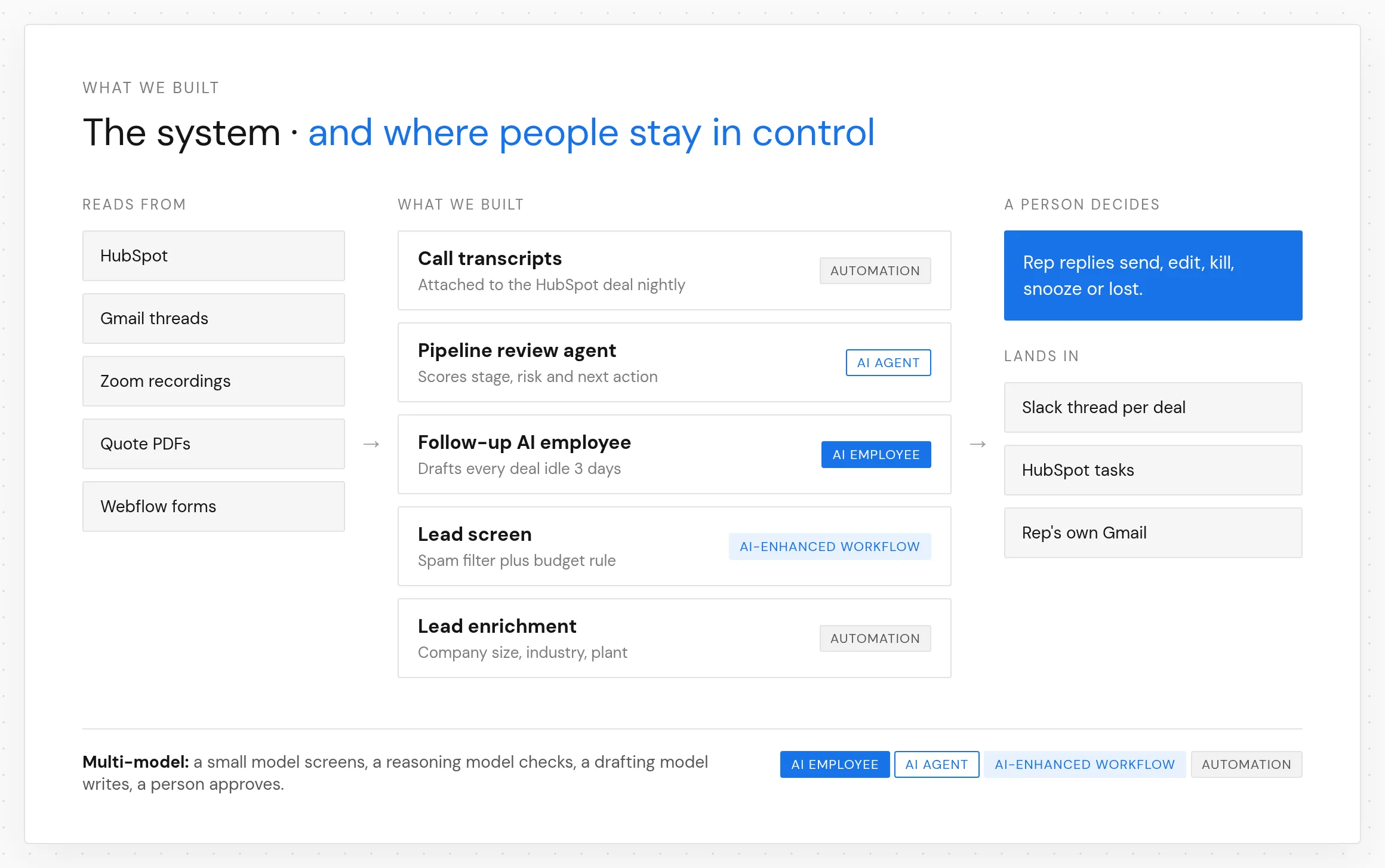
So we matched the tool to the job. Repeatable steps with no judgment became automations. One decision point inside an existing process became an AI-enhanced workflow. Reasoning over data with a narrow action became an AI agent.
Only one job needed an AI employee: owning follow-up end to end. The job means reading the deal, deciding what to say, writing it in the company’s voice, and learning from every correction its manager makes.
The final design had five parts. A follow-up AI employee, a pipeline review agent, a transcript sync automation, an enrichment automation, and an AI-enhanced lead screen on the website forms.
The build
The build ran six weeks. The transcript automation came first, because everything else depended on it. Every night at 2:00 am, new Zoom recordings are transcribed and attached to the matching HubSpot deal.
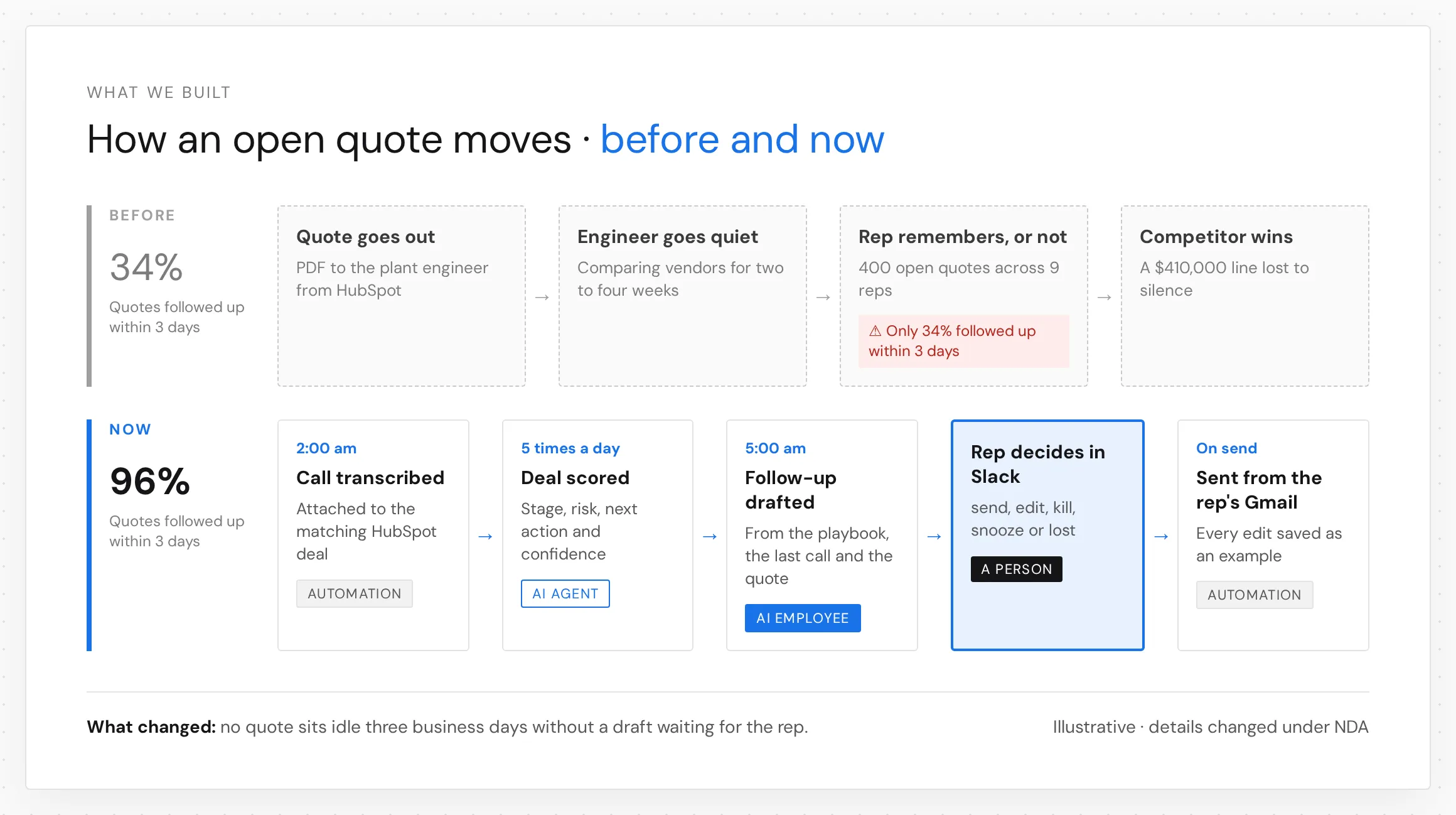
The pipeline review agent runs five times each weekday. A reasoning model reads the full email thread, the latest transcript, and the quote PDF. It returns a structured score: stage, risk, next action, and confidence.
The agent only creates a HubSpot task when its confidence clears a set threshold. Below that, it stays quiet. The threshold matters more than it sounds, because reps stop reading a task list that cries wolf.
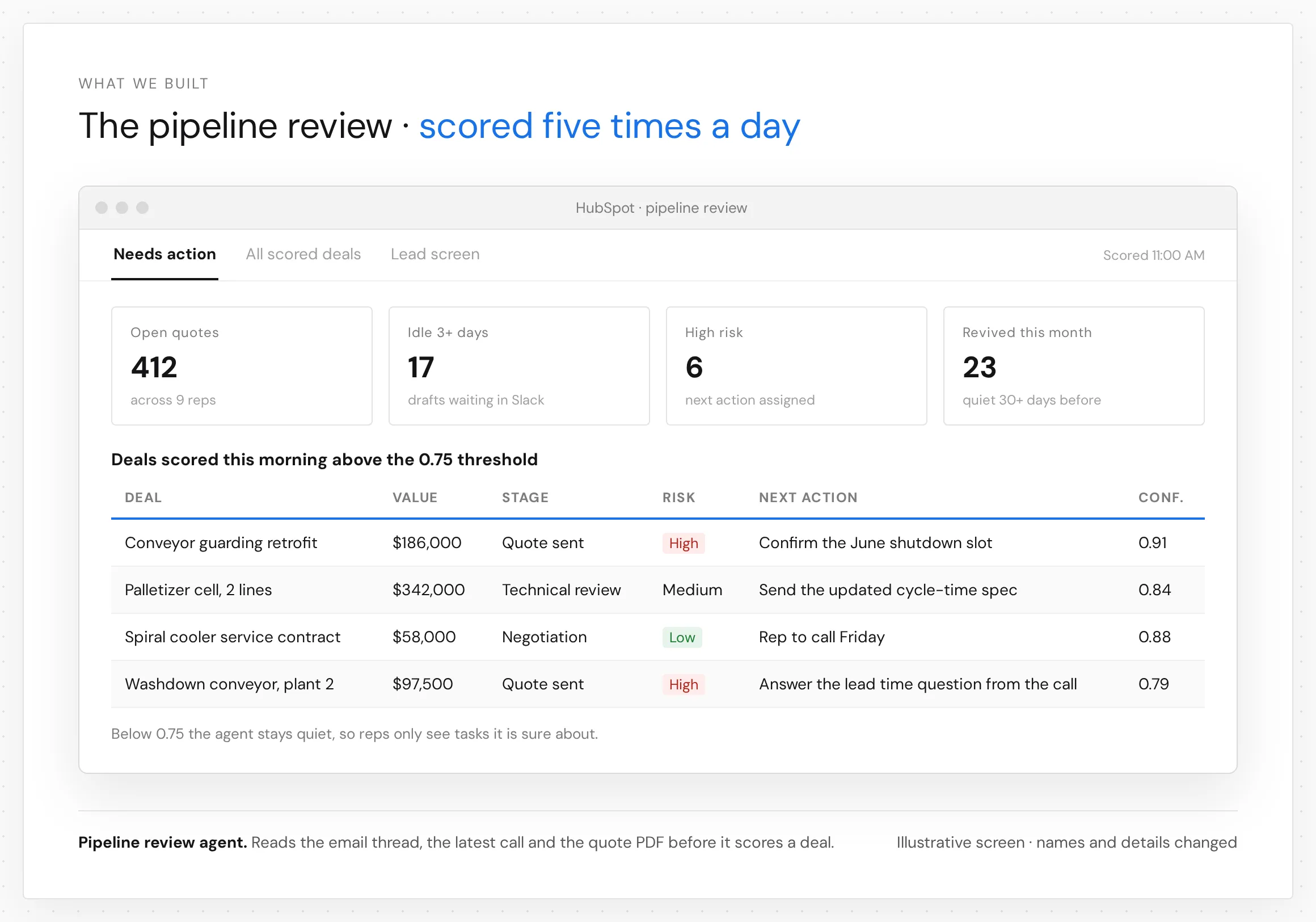
The follow-up AI employee wakes at 5:00 am. For every deal idle three business days, it drafts a message from the playbook, the last call, and the quote. Each draft lands as its own Slack thread.
The rep replies in that thread with one word: send, edit, kill, snooze, or lost. Send goes out from the rep’s own Gmail. Edit opens the draft. Every edit is saved as an example the next draft learns from.
The engine uses several models, each sized to its job. A small, fast model screens web form leads for spam at a fraction of a cent each. A stronger reasoning model scores deals. A drafting model writes in the company’s voice.
Matching model to task kept running costs under $600 a month. It also means we can swap any single model when a better one ships, without rebuilding the rest.
The lead screen sits on the Webflow forms. After the spam filter, a budget rule sends requests under $25,000 to a nurture list. Everything else reaches HubSpot with company size, industry, and plant location already filled in.
Rollout and training
The rollout started quietly. For the last two weeks of the build, the system ran in shadow mode. It drafted follow-ups that no customer saw, and reps compared them against what they would have sent.
The comparison was the first round of training. Reps saw where the drafts were good, flagged where they were wrong, and got used to the Slack threads before anything counted.
Go-live started with three volunteer reps in week seven. The other six joined in week nine, after a two-hour hands-on session where everyone approved, edited, and killed drafts on their own live deals.
The sales manager got a separate session on reading the pipeline report and changing follow-up rules himself. The inside sales coordinator became the owner of the playbook, so updates no longer wait on Phos AI Labs.
Making it better
The first two weeks were humbling. Reps edited 61% of drafts. The two most common fixes were length, because drafts ran long, and lead times, because the drafts quoted numbers that had changed.
We fixed both at the source. We capped follow-ups at 90 words in the playbook. Then we connected the production schedule spreadsheet, so every draft quotes this week’s lead time.
The pipeline agent had the opposite problem. It created about 40 tasks a day, and most were obvious. We raised the confidence threshold and cut it to eight to twelve tasks a day that reps actually opened.
In month three, a newer reasoning model came out. We tested it against all 412 historical quotes before switching. It caught stalled deals 84% of the time, up from 71%, so we swapped it in.
Then we pointed the same method at the 2,100 forgotten trade show leads. The agent read each one, qualified 312 as real fits, and the AI employee drafted a first message for each.
Every two weeks, the sales team and Phos AI Labs meet for thirty minutes. We review the edits, update the playbook, and decide what to tune next. By week twelve, the edit rate was down to 18%.
The outcome
In August, a plant engineer at a packaging company went quiet four days after a call about a $380,000 line upgrade. At 5:00 am, a draft was waiting in Slack.
It answered the one question he had raised on the call, quoted the current lead time, and attached the right install video. The rep sent it with one word. The order closed three weeks later.
The pattern repeats every week now. Nine reps start the morning with drafts instead of a blank inbox, and the VP of Sales sees only the deals that need his judgment.
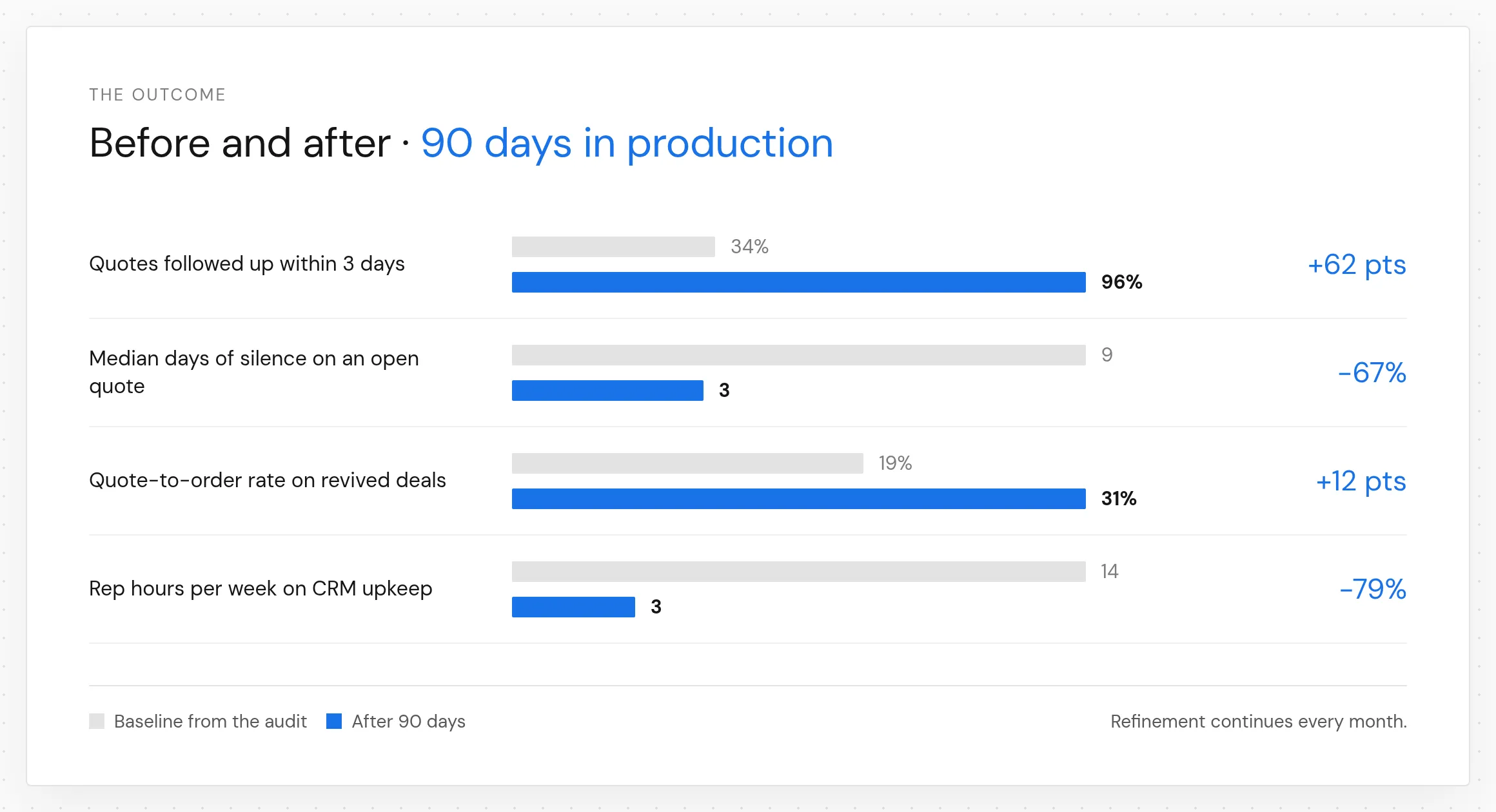
| KPI | Baseline | After 90 days |
|---|---|---|
| Quotes followed up within 3 days | 34% | 96% |
| Median days of silence on an open quote | 9 | 3 |
| Open quotes with no activity in 21+ days | 140 | 11 |
| Quote-to-order rate on revived deals | 19% | 31% |
| Rep hours per week on CRM upkeep | 14 | 3 |
| Historical leads reviewed | 0 | 2,100 |
| Pipeline rebuilt from old leads | $0 | $2.4M |
| Drafts sent without edits | n/a | 82% |
The 312 revived trade show leads produced 41 meetings and nine orders in the first quarter. The money had been sitting in a spreadsheet for two years.
We used to find out a quote had gone cold when the customer bought from someone else. Now the draft is waiting in Slack before I would have noticed the deal was slipping.
What’s next
The project has no end date. Each approved edit teaches the system, and each new model generation makes the scoring sharper. We retest every model release against the same 412 quotes before switching.
Next, the AI employee will assemble first-draft proposals from the company’s past winning proposals. The target is a quote-to-order rate above 35% on revived deals by the end of next quarter.
If your quotes go quiet after they leave the building, a conversation with Phos AI Labs is the fastest way to find out what your pipeline is holding.
Client details changed under NDA.